
Last updated November 24, 2026
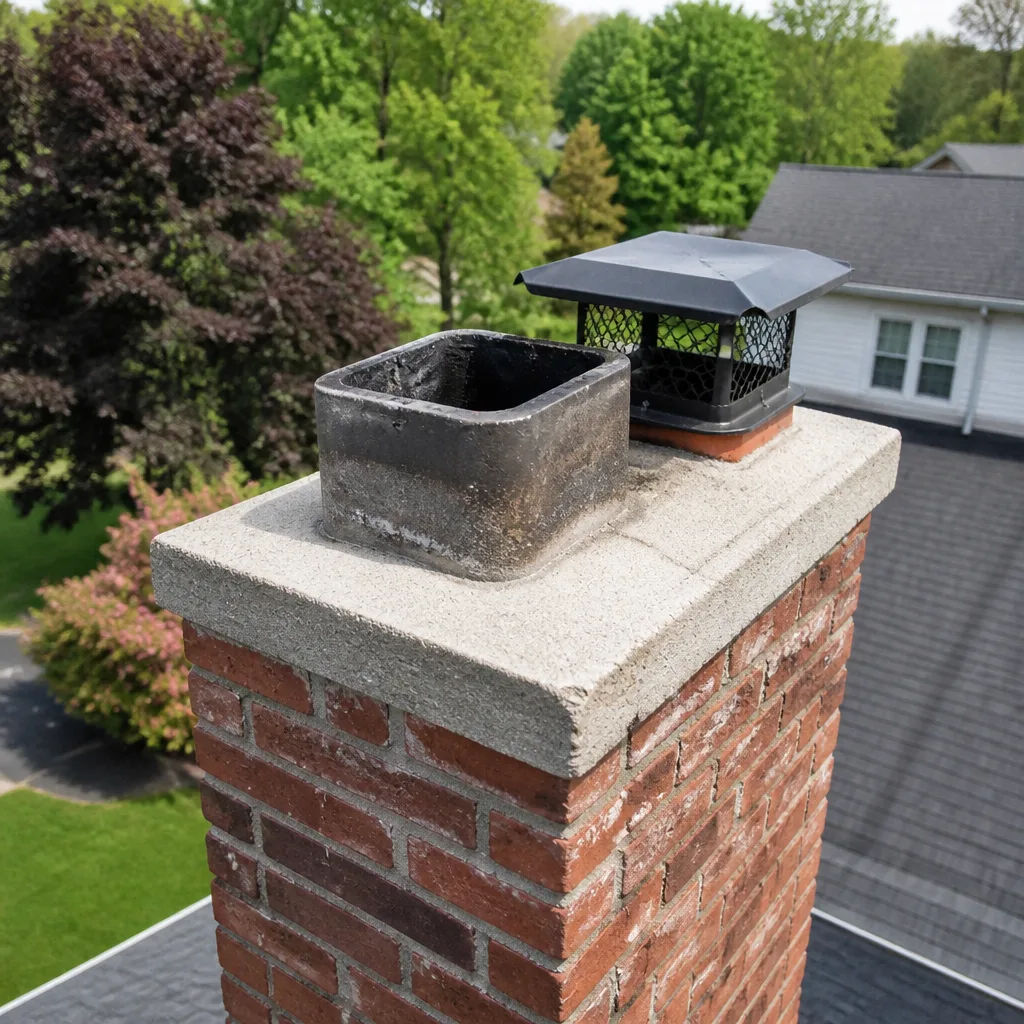 Sweep & inspection
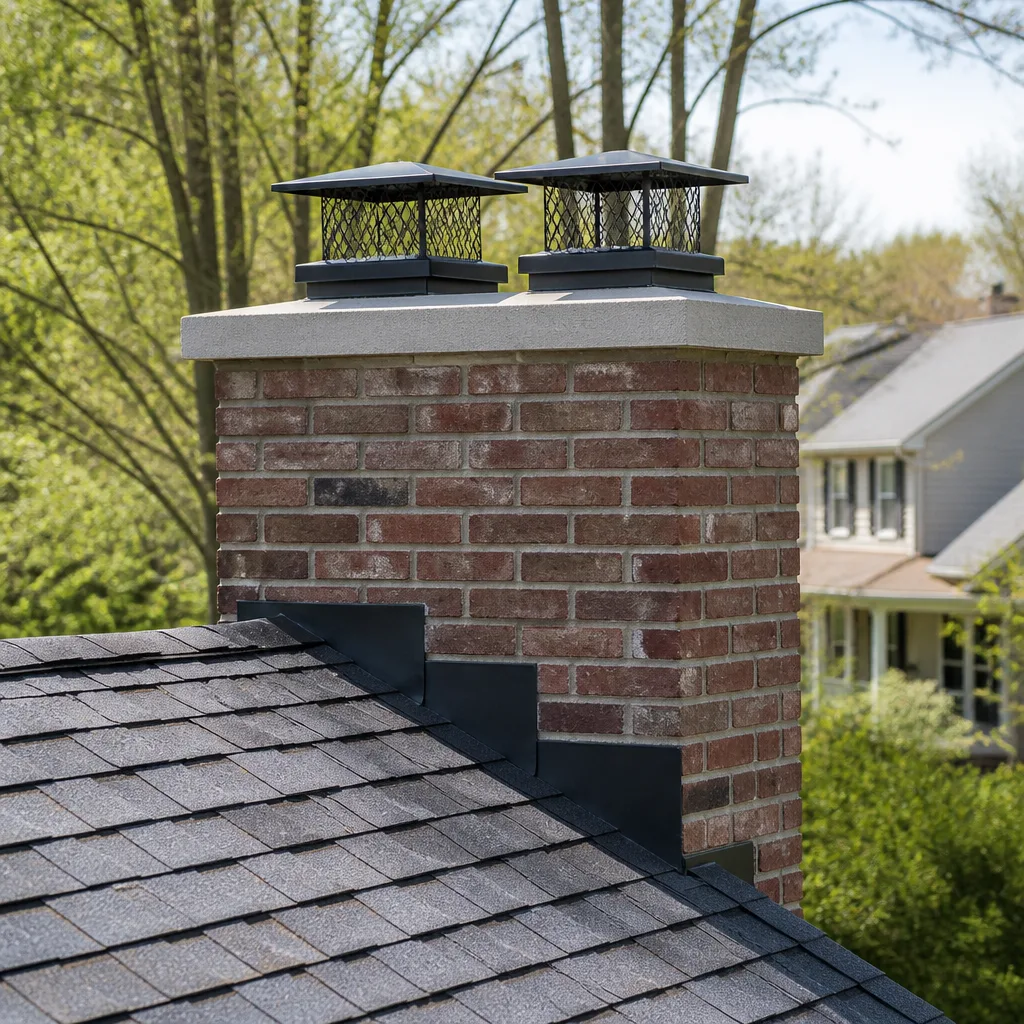 Caps & crowns
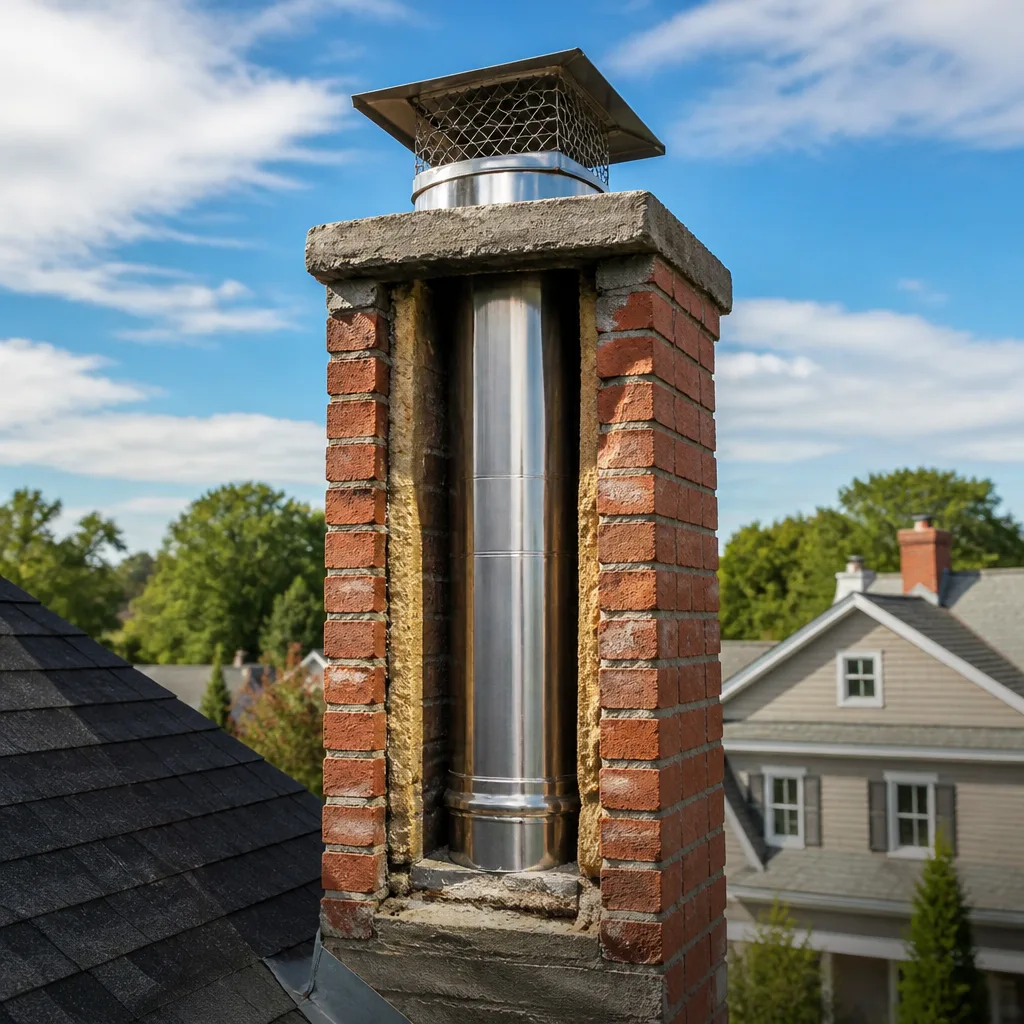 Flue relining
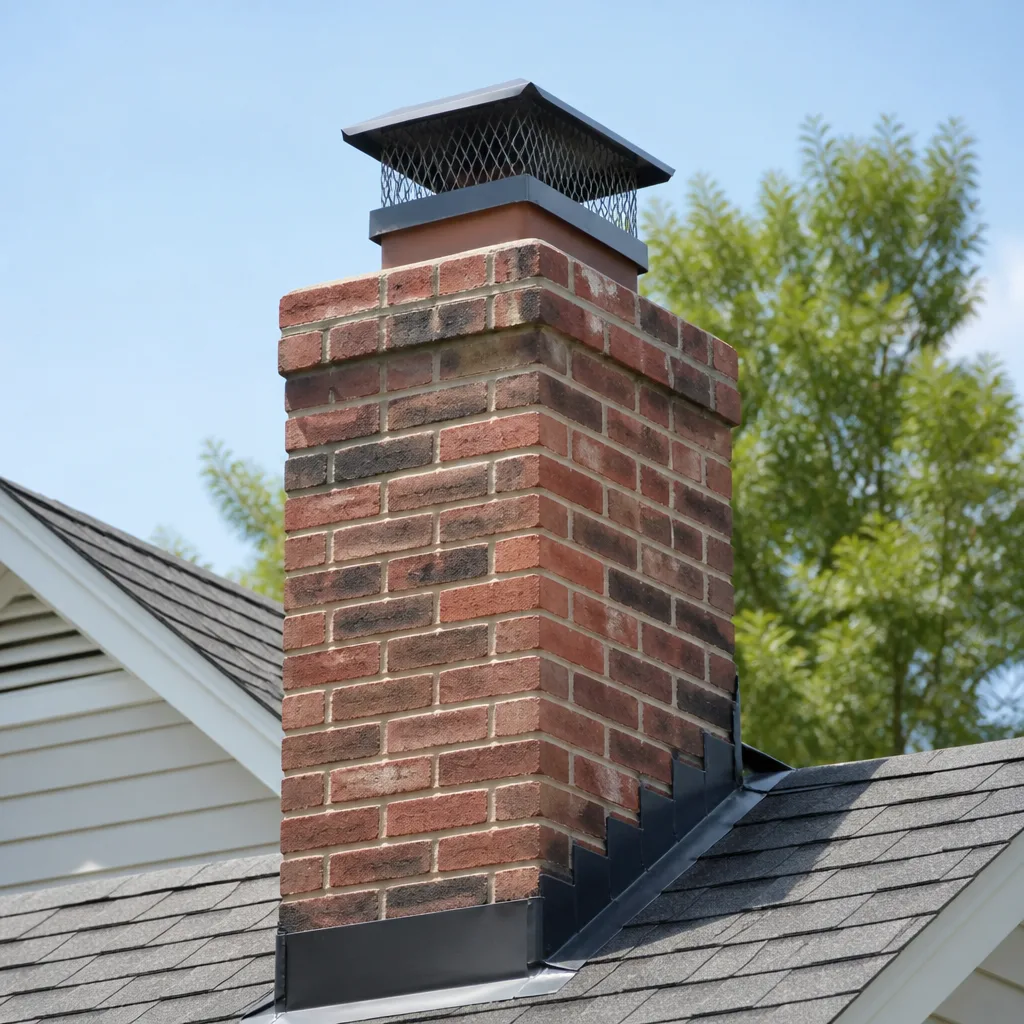 Masonry repair
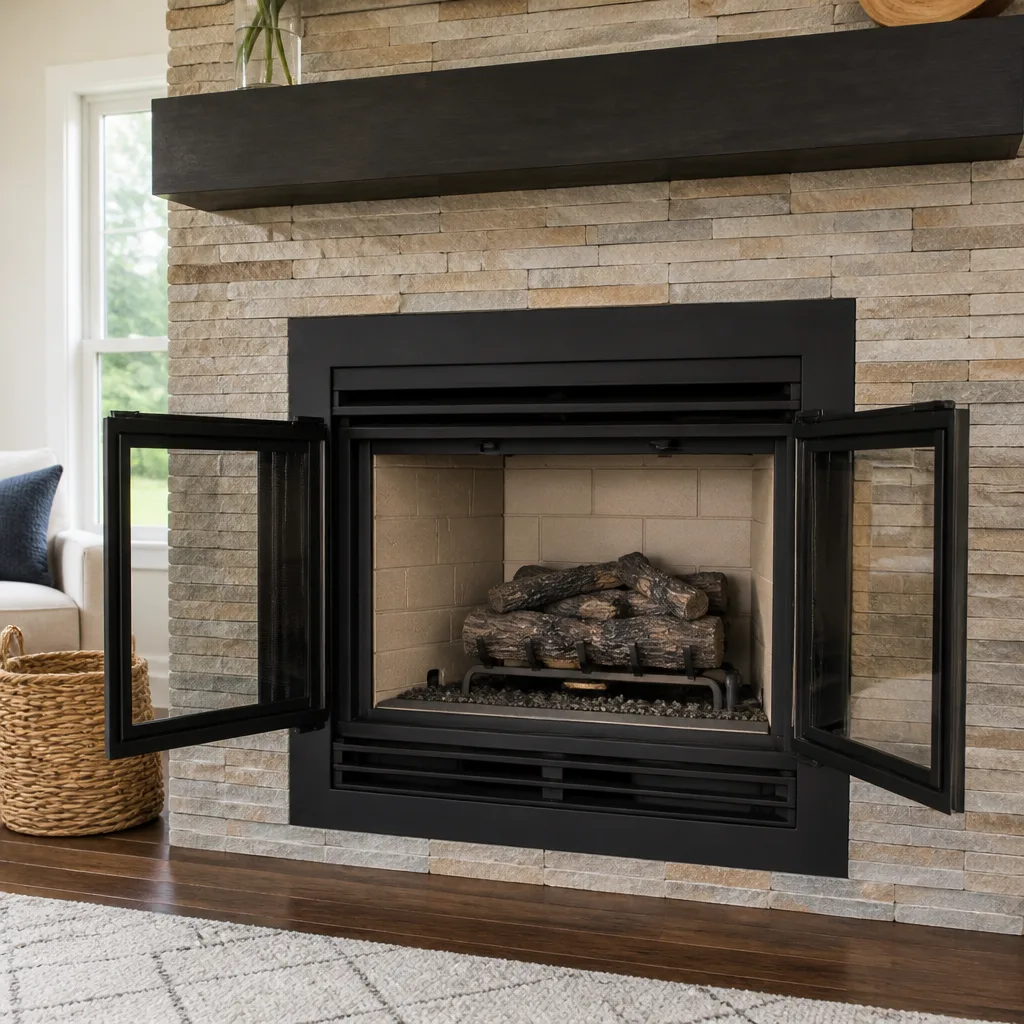 Gas fireplace service
Level 1 sweep and inspection to the NFPA 211 annual standard - flue, crown, cap, and flashing checked and photographed
Chimney sweep logs do not sweep chimneys. They loosen some creosote - which then falls where a brush and vacuum still have to collect it.
Chimney Sweep Troubleshooting in Sharpstown: Common Problems and How to Fix Them
Most chimney problems that get labeled “mysterious” fall into a small number of categories: smoke coming back into the room, smells that show up when the fireplace is cold, draft that won’t pull, and visible wear on the masonry or flue. What makes them feel mysterious is that several of these look identical from the living room even when the cause behind them is completely different. If a technician can’t tell you why your chimney is misbehaving before they start the work, that’s a red flag, not a reason to just book the cleaning and hope. This guide maps symptoms to the trade-side causes so Sharpstown homeowners stop paying for the wrong service, and it covers how to tell which problems you can diagnose yourself and which ones need a camera before anyone quotes a repair.
Quick Answer
Chimney troubleshooting starts by matching the symptom to its cause: backdraft is usually negative pressure in a tight house or a blockage in the flue, odors from an unused chimney are usually creosote plus humidity and a failed cap or damper seal, and draft loss is often a firebox opening that’s oversized for the flue. Visible spalling mortar and cracked flue tile point to water and movement, not just age. Anything beyond a simple cleaning should be confirmed with a Level 2 camera inspection before repair work is quoted.
Styles & brands we work with
- Sweep & inspection
- Caps & crowns
- Flue relining
- Masonry repair
- Gas fireplace service
Table of Contents
- Smoke Blowing Back Into the Room: Two Causes That Look the Same
- Why Your Unused Chimney Smells in the Summer and What Actually Stops It
- Spalling Mortar Joints vs. Deteriorating Flue Tile: Telling Them Apart
- Draft Loss from an Oversized Firebox
- The Decision Tree: What You Can See vs. What Needs a Camera
- Rain Caps and Crowns: The First Line of Troubleshooting
- When a Liner Repair Beats a Full Replacement
- Problems a Cleaning Won’t Fix
Smoke Blowing Back Into the Room: Two Causes That Look the Same
Backdraft is the single most misunderstood chimney complaint. From the couch, smoke rolling out of the firebox instead of up the flue looks like one problem, but it usually breaks down into two very different causes, and the fix for one does nothing for the other.
The first is negative-pressure backdraft. Modern Sharpstown homes, and older houses that have been tightened up with new windows and weatherstripping, can be so air-sealed that the chimney can’t pull enough makeup air. A bath fan, a kitchen exhaust hood, or even a clothes dryer can depressurize the house enough that the flue reverses. The tell here is timing: smoke rolls out when another fan or appliance is running, or on still, mild days when the flue is cold and the stack isn’t warm enough to pull. The fix is about air supply and stack temperature, not about a blockage.
The second is obstruction-caused backdraft. Something is physically in the flue: a bird nest, a collapsed flue tile, a leaf damper that’s rusted shut, or a raccoon that found an uncapped chimney. The tell here is consistency. It backs up regardless of what’s running in the house, and it may have started all at once. The fix is removal and repair, and it’s the reason we don’t stop at a cleaning. The equipment we use includes Olympia Chimney and Gelco components for the caps and dampers that go back on, so the obstruction doesn’t recur. If you can’t tell which of these you have, that’s the moment to stop and get a Level 2 inspection rather than a guess.
The trade distinction matters because homeowners get talked into the wrong service. A sweep who finds no blockage and still charges for a cleaning has solved nothing if the real problem is house pressure. And a repair company that sells you a new cap won’t fix a flue that’s collapsing. Getting this right starts with chimney sweep diagnostics done by someone who can tell the difference.
Why Your Unused Chimney Smells in the Summer and What Actually Stops It
The most common call we get in a Houston-area summer is about smell. A chimney that hasn’t had a fire in it for months starts giving off a tar-like, asphalt-ish odor, strongest on humid days and often worse in the morning. The homeowner hasn’t used the fireplace, so it feels like it came out of nowhere.
Here’s what’s actually happening. Creosote, the residue left on the flue walls from past fires, absorbs moisture from the humid air. As it absorbs and off-gasses, it releases that heavy smell, and because warm, humid air in the chimney is lighter than the air in the house, the smell moves down and into the living space. This is a humidity-and-ventilation problem, not a sign you’re about to have a chimney fire from an unused flue. That’s why a cleaning alone won’t stop it. You can sweep the creosote off the walls, and if the moisture keeps coming in and the smell keeps backing down, the odor returns.
Stopping it means dealing with the two openings that let the problem in:
- Confirm the rain cap is intact and sealing the flue top from rain and humid air.
- Check the damper or top-sealing damper closes fully and seals when the fireplace isn’t in use.
- Sweep the creosote buildup that’s feeding the smell.
- Confirm the crown isn’t letting water track down the outside of the flue.
The rain cap and damper are the first line of defense here. A contractor that sells you the sweep without addressing either is solving half the problem. We stock and install Gelco and Famco caps for exactly this reason. If you’re smelling asphalt in July, ask for the cap and damper looked at before you pay for another cleaning.
Spalling Mortar Joints vs. Deteriorating Flue Tile: Telling Them Apart
Two kinds of visible deterioration show up on Sharpstown chimneys, and they’re routinely confused because both look like “the chimney is crumbling.” They’re different problems with different fixes.
Spalling mortar joints
Spalling is when the mortar between the bricks flakes, pits, or crumbles away, leaving the brick faces proud of the joints. On the exterior, it usually shows up on the crown or the shoulders of the chimney, the parts most exposed to rain and sun. The cause is water: a failed crown, a cracked cap, or the mortar itself reaching the end of its service life. Left alone, spalling lets water into the masonry, and in Sharpstown’s clay-soil environment, where foundation movement is a fact of life, the added moisture and weight can accelerate movement in the chimney structure. The fix is repointing (grinding out and replacing the bad joints) plus addressing the water source.
Deteriorating flue tile
Flue tile is the clay lining inside the chimney. It cracks, spalls, and can separate at the joints, especially after a chimney fire or years of heat cycling. You often can’t see it from the firebox without a camera; you may notice debris or a rough edge at the top of the flue, but not the crack itself. Deteriorating flue tile is a bigger problem than a mortar joint because it exposes the surrounding brick and structure to heat and gases. It’s exactly what a Level 2 camera inspection is for.
Here’s the distinction that matters: spalling mortar is something you can see and feel from the outside, so it can be scoped and quoted without a camera. Deteriorating flue tile almost always needs the camera first. If a quote for “repointing” is being given for an internal problem, or a “liner replacement” is quoted without a camera walk-through, ask why. They won’t have the same answer, and one of them is the wrong service.
Draft Loss from an Oversized Firebox
Some Sharpstown homes were built with a fireplace that looks impressive but smokes, and the cause is in the original construction. A firebox opening that’s too large for the flue it serves creates a flue that’s the wrong size for the fire, and the chimney can’t move enough air to pull the smoke up. This is a common original-construction mistake in older homes, and it typically shows up as a weak or lazy fire, smoke spillage when the fire is first lit, or a draft that seems fine one day and weak the next.
What trade-side cause looks like this from the living room:
- Firebox opening out of proportion to the flue’s cross-section, so the fire outdraws the flue.
- A fire screen or glass door set that seals too tightly, cutting the fire’s air supply and changing how the flue pulls.
- A chimney that’s too short for its height relative to the roofline or a nearby tree, so the stack never warms enough to pull.
- A flue that’s been relined too small in the past, which the original firebox no longer matches.
The right fix depends on which cause you have. Sometimes a chimney that won’t draft because of a tight house gets resolved by air supply and stack temperature; sometimes the firebox opening genuinely needs to be reduced with a liner or a smoke guard; sometimes the flue itself needs a correct-sized reline. This is why we don’t quote a draft problem from a phone description. The fix for a firebox that’s too big for its flue is not the same fix as for an obstruction, and the two look alike at the couch. Both belong in the same diagnostic flow, which is the only way to avoid paying twice for the wrong service.
The Decision Tree: What You Can See vs. What Needs a Camera
This is the practical part. If you read nothing else, use this to decide what your next step should be, and what you should not pay for yet.
Symptoms you can observe yourself, before any quote
- Visible staining on the chimney exterior or the ceiling near the flue: a strong sign of water entry from the crown, cap, or flashing, and something a technician can diagnose on sight.
- Odor when the fireplace is unused: the humidity-and-creosote problem above, addressed by cap and damper first.
- Visible blockage at the firebox or the flue top: you can see a nest, a leaf damper stuck shut, or debris, and it should be confirmed and cleared before any fire.
- Spalling mortar joints on the exterior: visible and scoped without a camera, but it should be checked alongside the flue tile.
- A weak or smoky fire that starts reliably but won’t pull: the oversized-firebox and house-pressure question, which needs a diagnosis but starts with observation.
Symptoms that require a Level 2 camera inspection before any work is quoted
- Cracked or missing flue tile, or debris at the top of the flue.
- A chimney fire in the home’s history, even a small one.
- A persistent draft problem that hasn’t responded to cap and damper fixes.
- Any repair that involves the internal flue or a reline.
- A change in the home’s heating system, or a sale of the home that calls for a documented inspection.
The rule is simple: if the work being quoted is on the inside of the flue, the camera has to come out first. Visual-only inspections have their place, but they can’t see a separated flue tile joint. A quote for an internal repair without a camera is a quote based on a guess. We run both a visual and a Level 2-style inspection as standard, and we connect the inspection to the repair capability so you don’t end up with a report and no path forward.
Rain Caps and Crowns: The First Line of Troubleshooting
Before any deeper diagnosis, the top of the chimney gets a hard look. The rain cap and the crown do more troubleshooting work than any other part of the system, because most of the “unexplained” problems (smell, water staining, premature mortar failure) start there. A cap that’s missing, rusted through, or knocked off lets in rain, birds, and humid air. A crown that’s cracked lets water track down the masonry. Both are common, both are cheap to fix relative to the damage they prevent, and both should be checked before a cleaning is even scheduled.
The trade-standard answer is a properly fitted cap and a sealed crown. We install Gelco and Famco caps, and we handle the crown work as part of the same visit. The reason this matters for troubleshooting is that it separates the problems. If the cap and crown are sound and the symptom is still there, the cause is in the flue or the firebox and the camera comes out. If the cap is gone, or the crown is cracked, you’ve found at least one cause without paying for a diagnostic. That’s the right order of operations, and it’s why we treat chimney cap & crown work as a first-line step, not an upsell.
A note on the north Texas and Houston-area swing: summers here are long and humid enough that a failing cap lets in more moisture than in drier climates, and the winter upswing in use catches a chimney that’s been sitting damp. Checking the cap and crown before the heating season is the single most useful thing a homeowner can do to avoid the odor and water problems.
When a Liner Repair Beats a Full Replacement
When the camera shows a failing flue liner, the reflex is to quote a full reline. Sometimes that’s right, and sometimes a targeted repair does the job. The distinction is the same one we’ve been drawing throughout this guide: match the fix to the actual defect, not to the category of problem.
A full reline makes sense when the original flue tile is extensively cracked, separated, or missing, or when the flue was never correctly sized for the firebox. In those cases, the structural lining is gone and it needs to be rebuilt with a new liner. That’s the DuraFlex flexible liner system, a nationally recognized product line used by professional chimney contractors, sized to the flue and the appliance.
A liner repair is the right answer when the damage is localized: a crack, a joint that’s separated, or a rough spot that a camera confirmed. HeatShield ceramic resurfacing is designed for exactly this. It’s a specialized ceramic flue-resurfacing system that rebuilds a smooth, sealed lining over a damaged flue without pulling the whole thing, and it’s a proven alternative to full liner replacement. Many sweep-only companies can’t offer it, because they hand off repair work to a separate contractor. We don’t. We can inspect, confirm the damage with a camera, and quote the targeted repair on the spot.
What you should ask when a liner repair is quoted: was the damage confirmed with a camera you can see, and is the repair backed by the manufacturer? HeatShield resurfacing carries the HeatShield manufacturer’s product warranty, and that should be on the quote. A targeted repair without a documented camera finding is a guess, and a targeted resurfacing without a warranty is a patch.
Problems a Cleaning Won’t Fix
A cleaning is the right service for a routine maintenance call. It’s the wrong service for most of what this guide describes. Here’s the line between the two.
- Backdraft: a cleaning doesn’t fix house pressure or a collapsed flue tile. It removes creosote; it doesn’t restore draft.
- Odor: a cleaning removes the creosote, but if the cap or damper is open to the humid air, the smell comes back. Cleaning plus cap and damper is the fix.
- Spalling mortar: a cleaning doesn’t repoint joints or seal a crown. This is chimney repair.
- Cracked flue tile: a cleaning won’t seal a crack. This is a liner repair, and it needs a camera first.
- Oversized firebox draft loss: a cleaning doesn’t change the firebox-to-flue ratio. This is a design and repair question.
- Water staining: a cleaning doesn’t stop water. The crown, cap, or flashing does.
This is the reason we tell homeowners to ask for the diagnosis first. If a technician says you need a cleaning and nothing else, and your symptom is one of the six above, that’s not a complete answer. The right pattern is: sweep if it’s due, inspect what the symptoms point to, and repair what the inspection confirms. One team handling both is the whole point. Chimney Sweep Sharpstown covers fireplace repair and the full chimney repair scope, so the diagnostic and the fix don’t get split between contractors who blame each other. Our technicians have up to 14 years of experience, and the inspection is run to the same standard every time.
Common Mistakes to Avoid
- Paying for a cleaning when the symptom is draft. A cleaning removes creosote but doesn’t fix house pressure or a collapsed flue tile. If your problem is backdraft, the cleaning won’t touch it.
- Assuming every smoke issue is a blockage. Negative-pressure backdraft and obstruction-caused backdraft look identical from the couch, and the fixes are completely different. Get the cause identified first.
- Treating summer odor as a cleaning problem. In Sharpstown’s humid summers, the asphalt smell from an unused chimney is driven by moisture coming in through the cap and damper. Cleaning without sealing those openings leaves the smell there.
- Quoting a liner repair without a camera. Cracked or separated flue tile can’t be seen from the firebox. If no camera walk-through shows the damage, the quote is a guess.
- Confusing spalling mortar with failing flue tile. One is visible on the exterior and fixed with repointing; the other is internal and needs a liner repair. Paying for the wrong one is the most common waste of money we see.
- Ignoring a cracked crown until the joints fail. Water entry is what turns a repointing job into a masonry rebuild, and in Sharpstown’s clay-soil conditions, moisture in the structure can aggravate movement. Check the crown before the heating season.
- Accepting a report with no path to repair. An inspection that hands you a list and refers you to a separate contractor leaves you responsible for coordinating the fix. A single team should inspect and repair.
See the difference
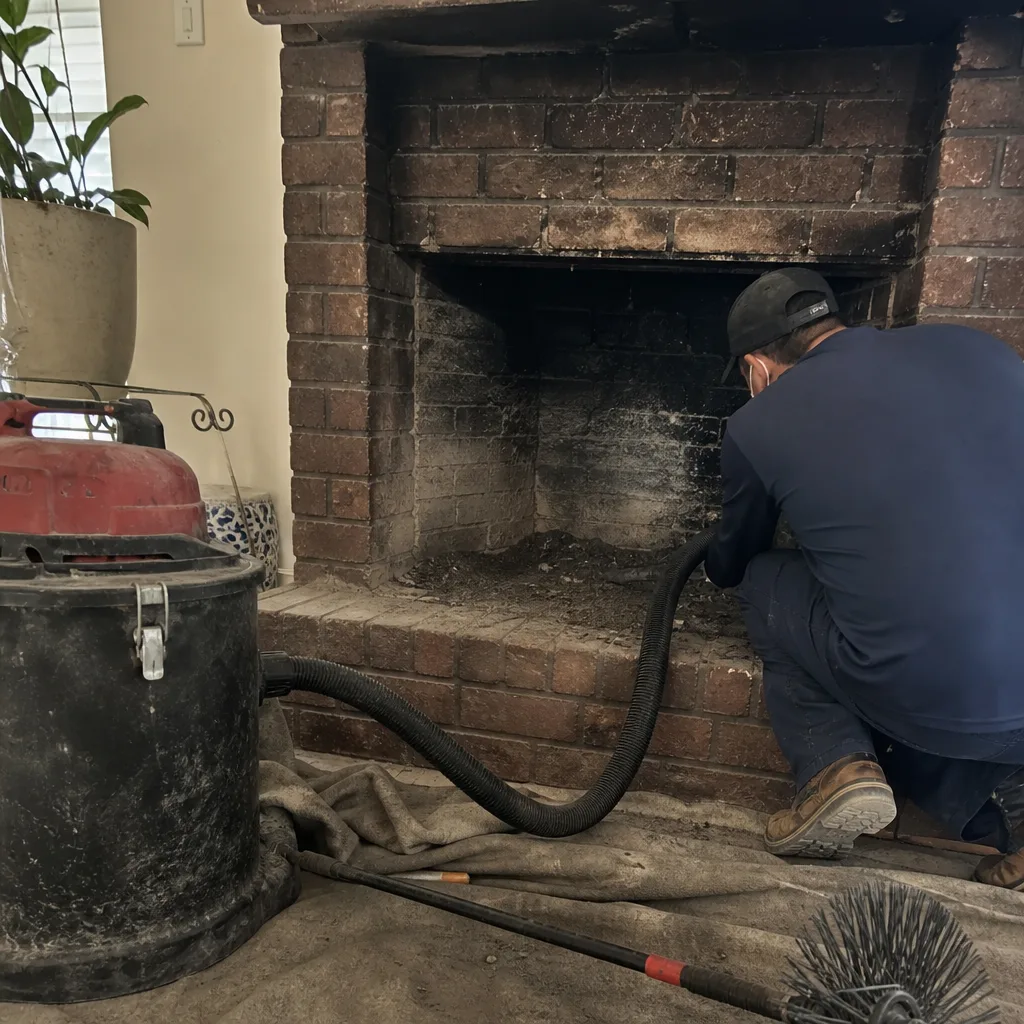 Before
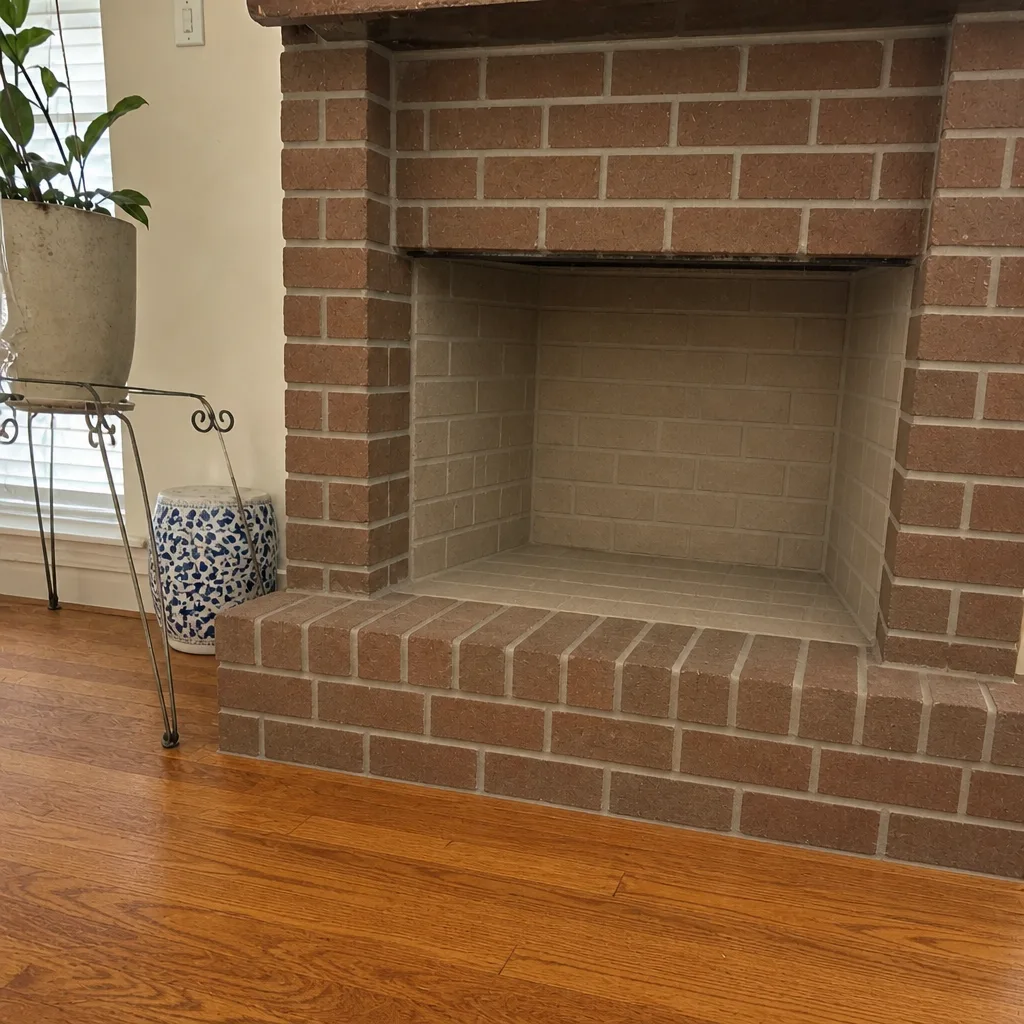 After
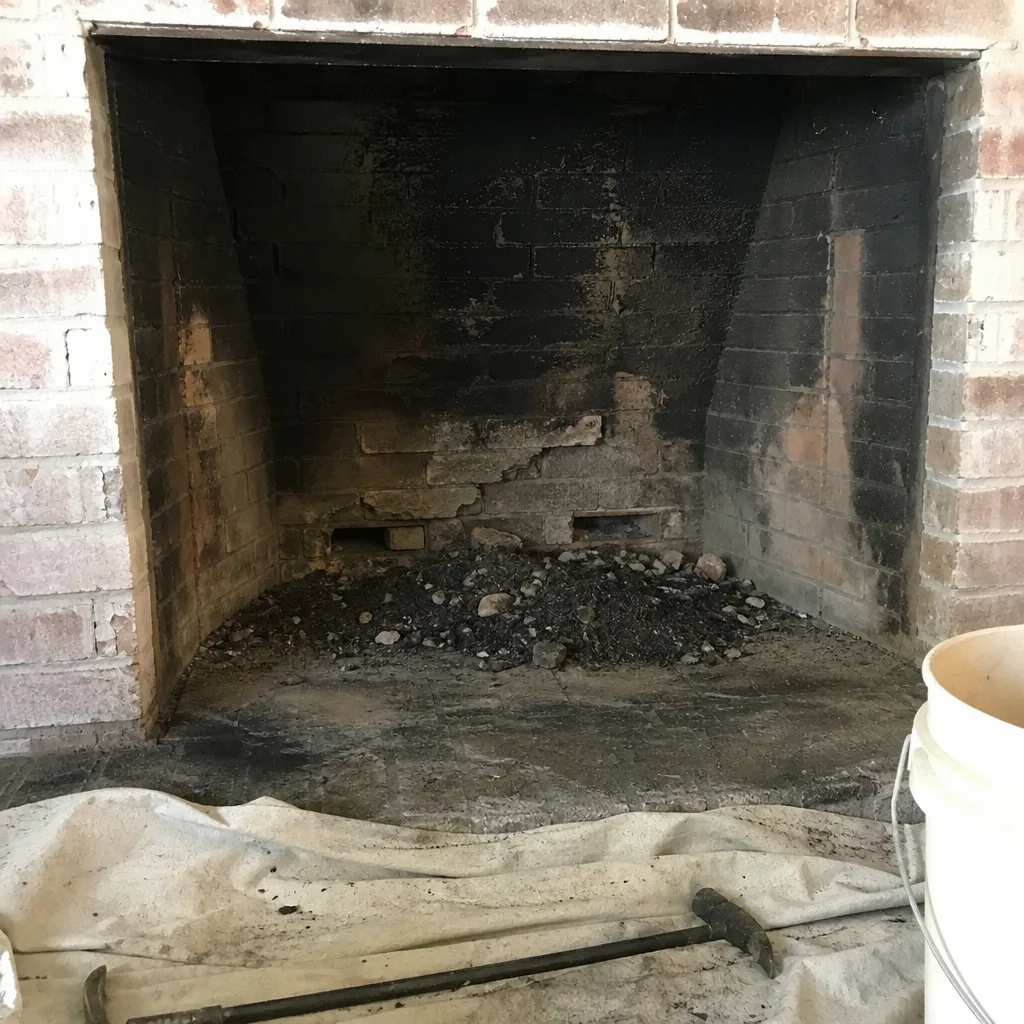 Before
 After
 Before
 After
When to Call a Professional
Call a professional when the symptom involves the inside of the flue, when smoke comes into the room, when you smell the tar or asphalt odor on an unused chimney, or when you can see cracks, spalling, or staining on the chimney exterior. Call before you light the first fire of the season if the chimney hasn’t been inspected. Call if a previous sweep told you that you “need repairs” but gave you no way to get them done, or if a quote for a repair came without a camera finding. Call if you’ve had a chimney fire in the past, even a small one. For anything that’s a design or draft question, a firebox that won’t pull, or a liner that needs resurfacing, call before you spend more on cleanings. Chimney Sweep Sharpstown offers free estimates in Sharpstown. Call (833) 991-8956. We answer 24/7. Fast dispatch from 7am to 7pm, Sunday through Friday.
Frequently Asked Questions
If your only symptom is normal creosote buildup with no smoke, odor, staining, or draft complaint, a cleaning is likely all that’s due. If you have backdraft, an asphalt smell from an unused chimney, visible spalling, or a weak draft, the cleaning won’t fix it, and a camera inspection should come first. The diagnosis comes before the work, not after.
Creosote from past fires absorbs humidity from the air and off-gasses, and because warm, humid air in the chimney is lighter than the air in the house, the smell moves down into the living space. It’s a moisture-and-ventilation problem, not a sign the flue is dangerous on its own, and a cleaning alone won’t stop it. Fixing the rain cap and the damper seal is what keeps the smell out.
Yes, and backdraft is the classic case. Negative-pressure backdraft from a tight house and obstruction-caused backdraft from a collapsed flue tile or a nest look identical at the firebox. The first is about air supply and stack temperature; the second is removal and repair. Getting the cause identified with a camera and an inspection is the only way to avoid paying for the wrong service.
Spalling mortar is on the exterior: joints flake or crumble, and you can see and feel it. It’s fixed by repointing and addressing the water source. A failing flue tile is internal: the lining cracks or separates, and you usually can’t see it without a camera. One is exterior masonry repair; the other is an internal liner repair, and they should never be quoted as the same job.
Because the cleaning removed creosote but didn’t address the cause. If the firebox opening is oversized for the flue, if the house is depressurizing, if a nearby tree is making the stack too short, or if a flue tile has separated, the smoke comes back no matter how clean the flue is. The fix is a diagnosis of the draft, not another sweep.
For exterior mortar and cap work, a visual check can be enough to quote. For anything internal, crack detection, liner damage, or a draft problem that hasn’t responded to simpler fixes, the camera is what confirms the cause. We run a visual and a Level 2-style inspection as standard, and we won’t quote an internal repair without the camera walk-through, because the quote would be a guess. Call (833) 991-8956 for an exact quote; estimates are free.
The Bottom Line
Chimney troubleshooting comes down to matching the symptom to the cause, and the causes split into a small number of recognizable categories: backdraft from house pressure or a blockage, odor from humidity plus a failed cap or damper, draft loss from an oversized firebox, and visible deterioration that’s either spalling mortar or failing flue tile. The fixes don’t overlap, so the wrong quote wastes money and leaves the problem in place. Your job as a homeowner is to observe the symptom, and ours is to confirm the cause with a camera before we quote. Chimney Sweep Sharpstown handles the sweep, the inspection, and the repair as one team, with trade-brand parts including HeatShield, Gelco, Olympia Chimney, and Famco. One call from cap to firebox.
Ready to stop guessing and get to the cause? Whether it’s a smoky firebox, a summer smell, or a crack you noticed on the crown, we’ll diagnose it, show you what we found, and fix it ourselves rather than hand you off to a second contractor. Chimney Sweep Sharpstown covers the full chimney system in Sharpstown, and the estimate is free. Call (833) 991-8956. We answer 24/7. Fast dispatch from 7am to 7pm, Sunday through Friday.
Written by the team at Chimney Sweep Sharpstown.