
Last updated November 24, 2026
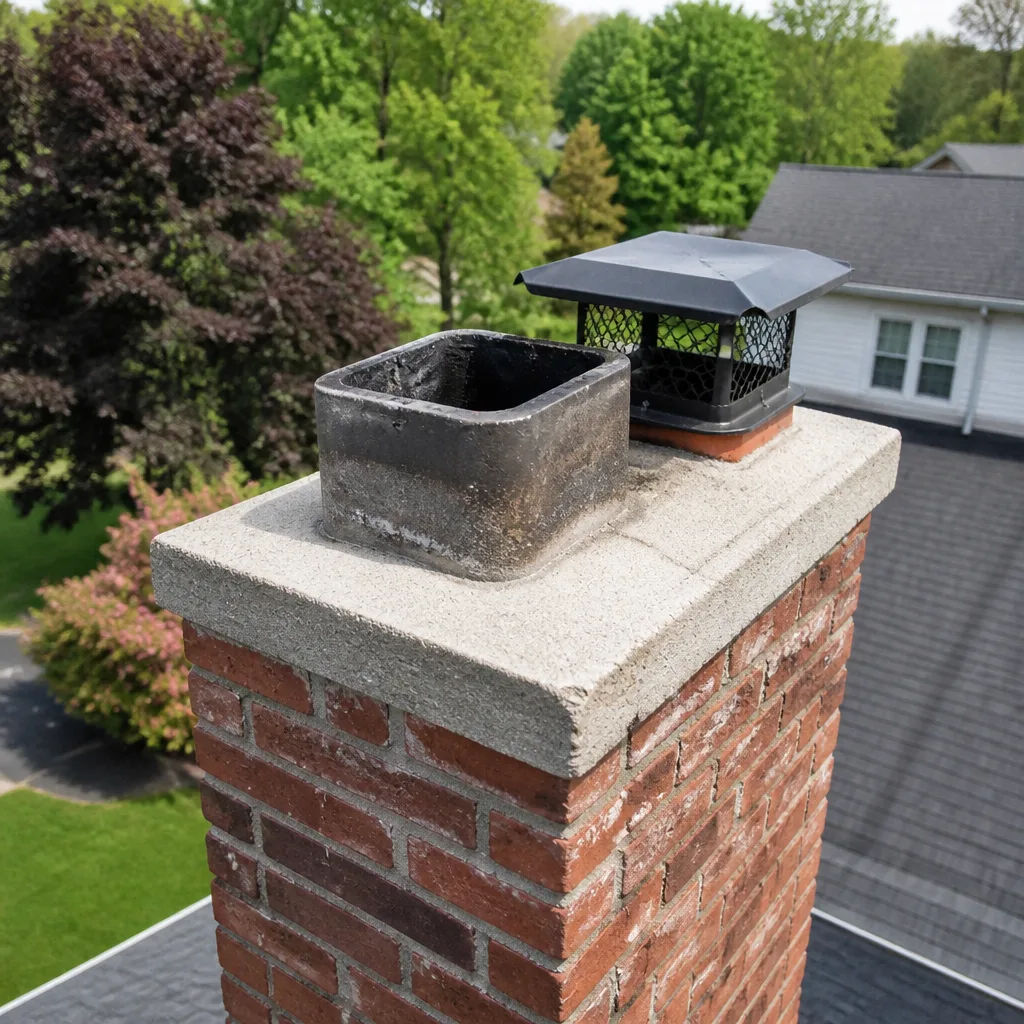 Sweep & inspection
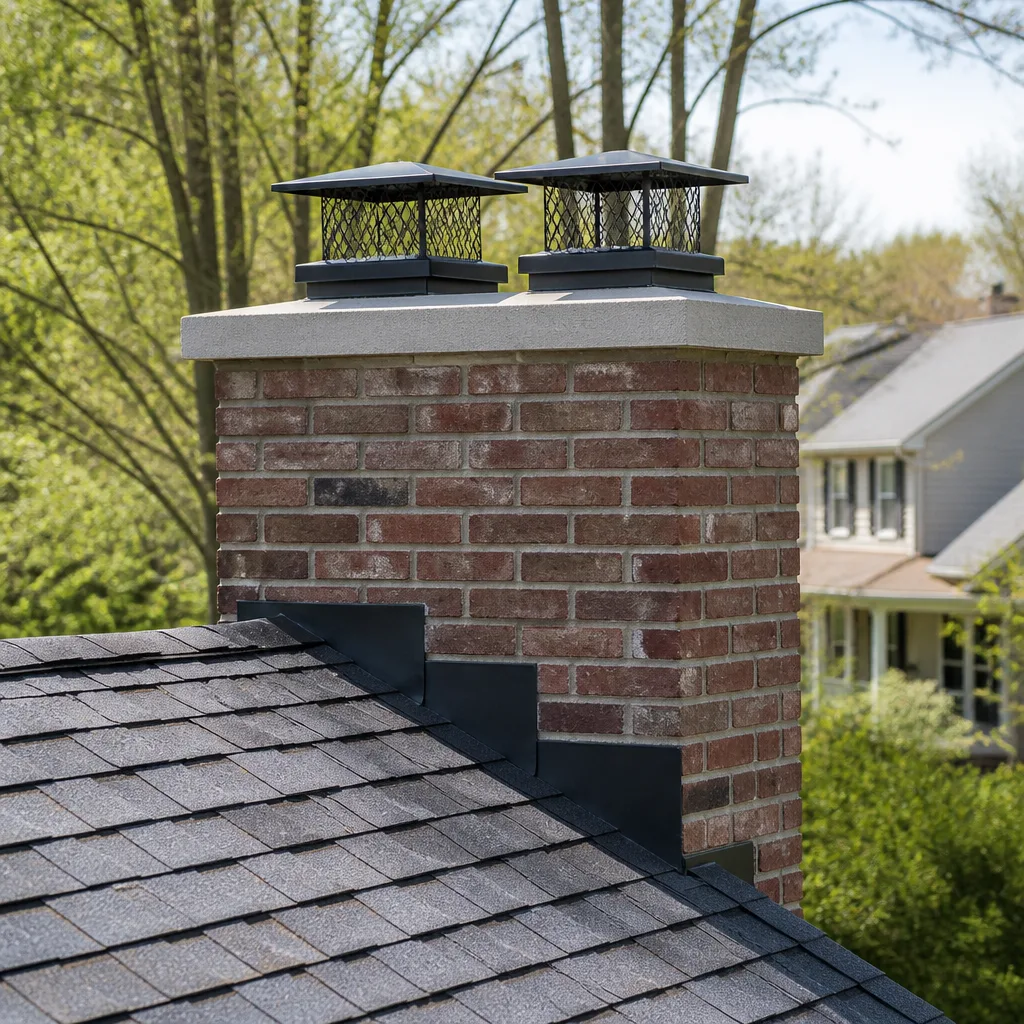 Caps & crowns
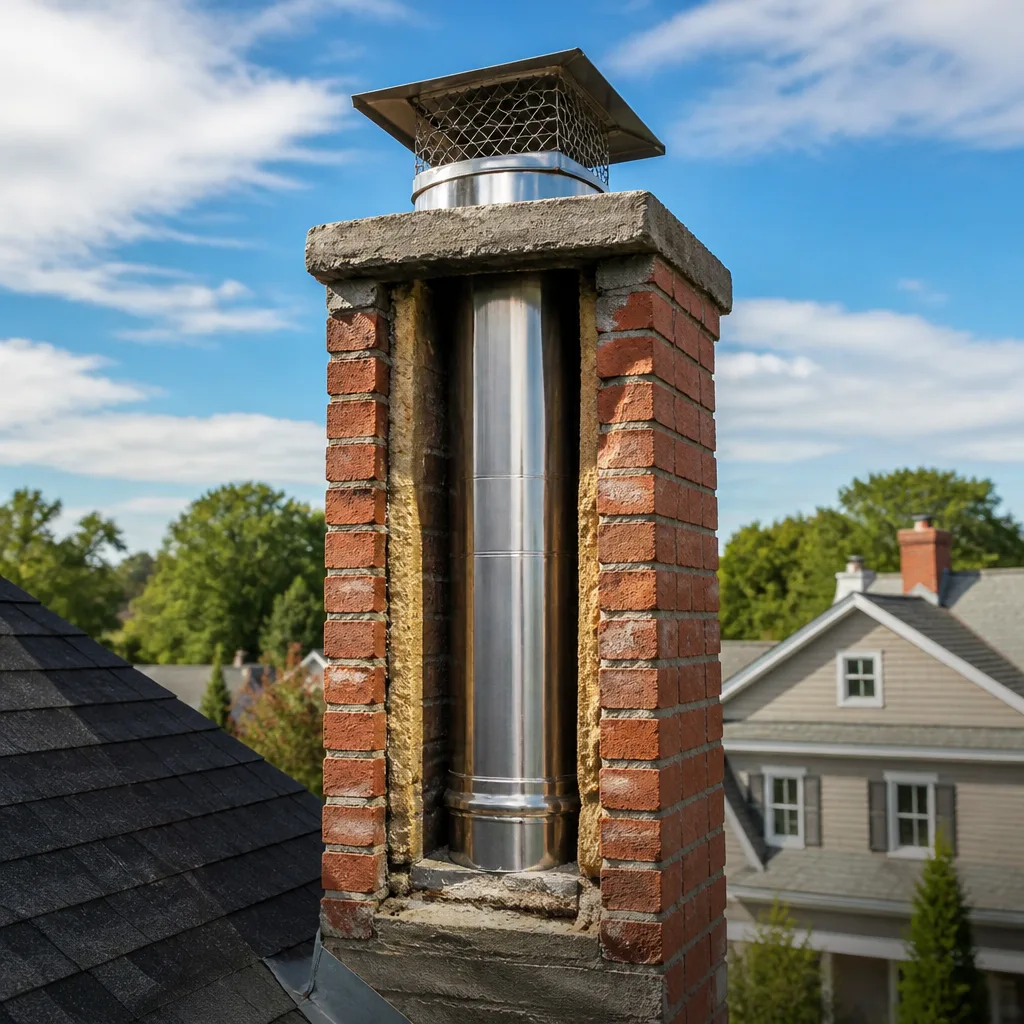 Flue relining
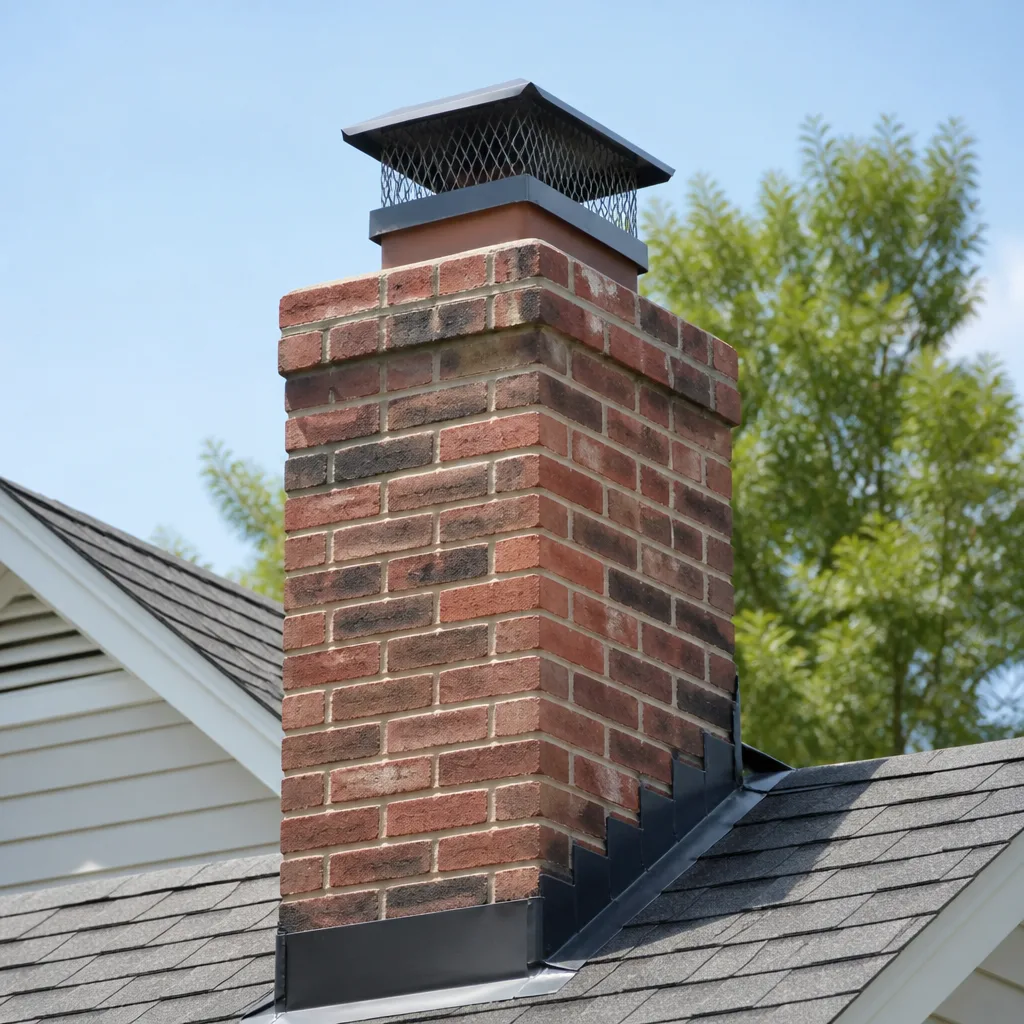 Masonry repair
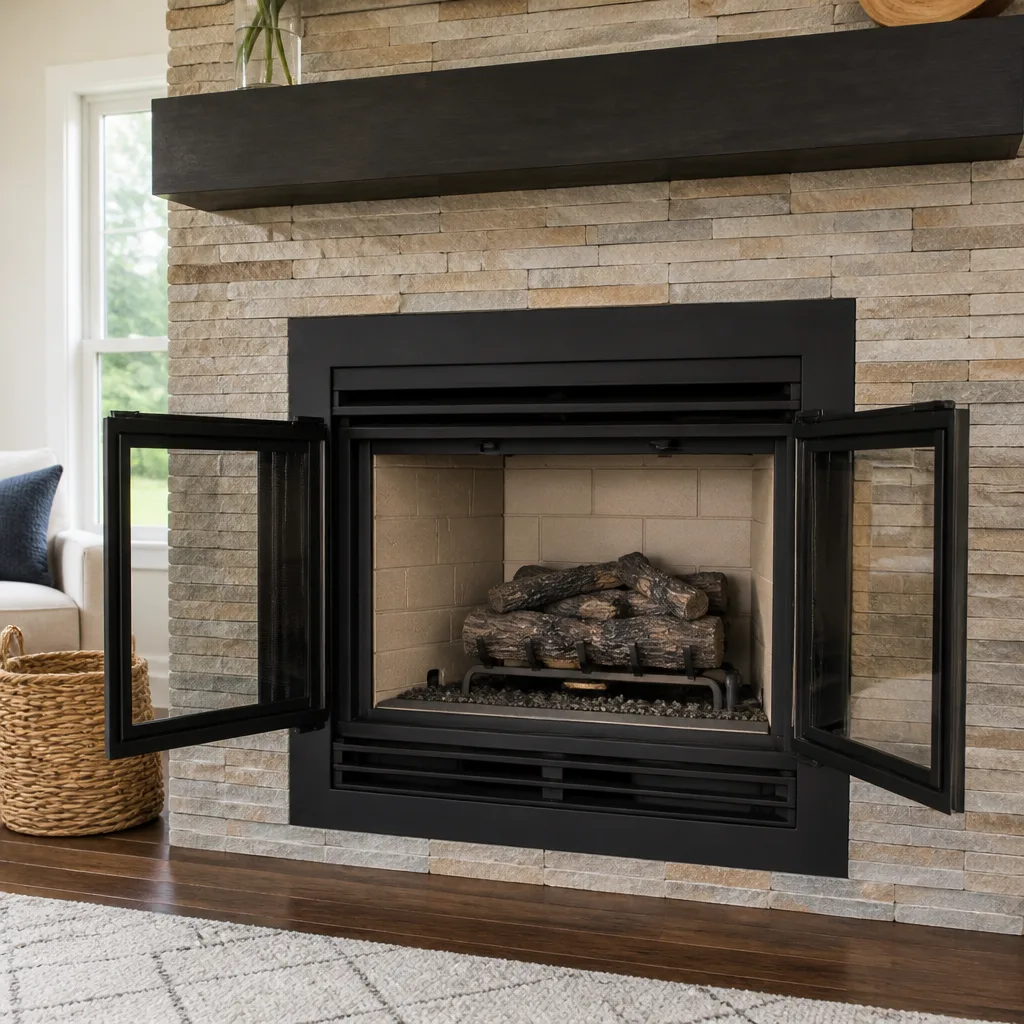 Gas fireplace service
Level 1 sweep and inspection to the NFPA 211 annual standard - flue, crown, cap, and flashing checked and photographed
Chimney sweep logs do not sweep chimneys. They loosen some creosote - which then falls where a brush and vacuum still have to collect it.
Chimney Sweep Maintenance Schedule: What to Do and When
“At least once a year” is the line most homeowners remember from NFPA 211, and it’s a good floor. It’s also a floor written to cover a wood-burning fireplace used weekly through a cold winter, which isn’t what most of Sharpstown actually runs. A gas insert that lights up eight nights a season and a wood-burning firebox that sees three cords a year do not degrade on the same clock. Treating them the same is how people either overspend on unnecessary sweeps or skip the inspection that would have caught a cracking crown. This guide breaks the annual calendar down by fuel type, by usage, and by the specific ways chimneys in Sharpstown’s humid, mild-winter climate actually fail, so you know what to do and when to do it.
Quick Answer
Wood-burning chimneys need an annual sweep plus a Level 1 inspection; gas fireplaces need an annual inspection and a sweep every 2-3 years unless debris or bird activity shows up; oil-fired systems need an annual sweep regardless of use because of acidic sulfur deposits. In Sharpstown, schedule the sweep in September before the first burn, not in spring, because summer humidity reactivates dormant creosote odors and hides new deterioration.
Styles & brands we work with
- Sweep & inspection
- Caps & crowns
- Flue relining
- Masonry repair
- Gas fireplace service
Table of Contents
- Why “Once a Year” Isn’t a Schedule
- The Maintenance Schedule by Fuel Type
- Why September Is the Right Month in Sharpstown
- Tasks That Fall Outside the Sweep Visit
- Level 1 vs. Level 2 Inspections: What They Mean in Practice
- The Annual Checklist, Month by Month
- What a Sweep Checks That You Can’t
- Common Mistakes to Avoid
Why “Once a Year” Isn’t a Schedule
A schedule tells you what to do, when, and why. “Once a year” only tells you the minimum frequency for the worst-case fuel and usage pattern, and leaves you to guess the rest. Chimney maintenance is really four separate jobs running on four separate clocks: creosote removal, inspection, exterior envelope care (cap and crown), and the firebox and damper internals. They don’t all need attention on the same date, and lumping them into a single annual visit means some get ignored for years.
Creosote is the deposit that forms when wood smoke cools against the flue walls. It accumulates faster with damp wood, restricted draft, and long, slow, smoldering fires. A wood-burning fireplace in Sharpstown that gets used hard through the cooler months can build a meaningful layer in a single season. A gas log set produces almost no creosote at all, but it does produce moisture, and moisture is what drives the rust and spalling that show up on the inside of a metal flue or the damper assembly.
The exterior is a third clock. Caps and crowns take weather year-round in this part of Texas: sun, humidity, and the occasional hard rain. Those components age on their own timeline, separate from anything burning inside. The fourth clock is the firebox and damper: mortar joints, the damper plate, and the firebrick. Those need a visual once-over more often than they need a full sweep.
In our experience, the homeowners who end up with the fewest surprises are the ones who stop thinking of maintenance as “get it swept” and start thinking of it as “run the four clocks.” That’s the framework the rest of this guide is built on.
The Maintenance Schedule by Fuel Type
The right schedule depends first on what you burn. Here’s how the four clocks line up for each fuel type. Match your system, then adjust for how often you actually use it.
Wood-Burning Fireplaces and Stoves
Wood-burning systems carry the heaviest maintenance load because they produce both creosote and moisture. The baseline schedule is:
- Annual sweep before the first burn of the season, once a measurable layer of creosote builds. For a fireplace used weekly through the cooler months, that’s every year. For one used a handful of times, the sweep may be every other year, but the inspection should still be annual.
- Annual Level 1 inspection alongside the sweep, checking the firebox, damper, flue, and all visible portions of the chimney.
- Level 2 inspection after any chimney fire, after a change in fuel type (say, converting from wood to gas), after an earthquake or significant structural event, or when you buy the home.
- Cap and crown check once a year during the sweep, and again after any strong storm.
Gas Fireplaces and Inserts
Gas systems produce very little creosote. What they do produce is water vapor, and in a humid climate like Sharpstown’s, that moisture is what causes trouble: rust on the metal flue, corrosion of the damper assembly, and spalling of any masonry the moisture reaches. The gas schedule looks different:
- Annual inspection, every year, no exceptions. This covers the flue, the venting, the firebox, and the burner assembly.
- Sweep every 2-3 years unless debris, bird activity, or a visible buildup is detected during inspection. If a bird gets into the flue or a storm drops leaves down the cap, sweep sooner.
- Damper and venting check once a year. A gas fireplace that hasn’t been inspected in years is the most common source of carbon monoxide concerns we encounter.
Oil-Fired Systems
Oil produces sulfur-bearing deposits that turn acidic when they absorb moisture. Those deposits attack metal flues and masonry from the inside, and they do it whether the appliance runs once a month or once a year. That’s why the oil schedule is different from every other fuel type:
- Annual sweep, every year, regardless of use. There’s no “light use” exception here.
- Annual Level 1 inspection alongside the sweep, with attention to the flue’s internal condition.
- Level 2 inspection if any sulfur damage, pitting, or heavy deposit is found.
Matching Schedule to Usage
Fuel type sets the floor, but usage sets the ceiling. A wood-burning fireplace that runs three cords a season needs the sweep at the top of its annual slot; the same fireplace used twice a winter may only need it every other year. The inspection cadence, on the other hand, doesn’t flex with usage. That stays annual for every fuel type. If you’re unsure which column you fall into, a single chimney sweep visit will tell you: the sweep report shows the creosote layer, the condition of the flue, and how the cap and crown are holding up, and from there the right schedule for your system becomes clear.
Why September Is the Right Month in Sharpstown
The instinct is to schedule a chimney sweep in spring, right after the last fire of the season. That timing has one thing going for it: the system is fresh in your mind. But in Sharpstown’s climate, it’s the wrong window, and the reason comes down to what summer does to a chimney.
Creosote absorbs moisture. In a humid summer, the deposits in the flue pull moisture out of the air, and that moisture reacts with the creosote to produce the sour, smoky smell that shows up in a house in July. That’s summer reactivation, and it’s why a chimney that seemed fine in April can smell like a campfire in August. It also means that if you sweep in spring, you leave the flue clean but the summer still finds any residual deposits (and the flashings and cap area) to work on.
The better window is early September, before the first cool evening when someone decides to light a fire. Sweeping in September does three things at once:
- Clears the creosote before it reactivates during the shoulder season. A clean flue doesn’t stink in the fall.
- Reveals deterioration that summer may have caused (a hairline crack in the crown, a deteriorating mortar joint on the exterior), with enough lead time to fix it before the first fire.
- Confirms the cap and crown are intact before the storm season that often rolls through Sharpstown in the fall.
September also puts your inspection ahead of the annual rush. Homeowners who wait until the first cold snap call in a cluster, and scheduling gets tight. Sweeping in September means the work is done, the report is on hand, and any repair that needs doing has a comfortable window to be scheduled.
Tasks That Fall Outside the Sweep Visit
A sweep is a once-a-year (or once-every-few-years) event. Maintenance is what happens between visits. These are the homeowner-side tasks that catch problems early, and they’re the ones most people skip because nobody told them.
Monthly Damper Checks During the Non-Use Season
Through the spring and summer, when the fireplace is idle, open the damper once a month. Look up the flue with a flashlight and confirm the damper opens and closes freely. This is a two-minute check that catches a sticking damper, a nest built in the flue, or obvious debris before it becomes a fall problem. A damper that’s stuck open drafts warm air out of the house through the summer; one stuck closed traps moisture in the firebox. While the firebox is idle is the only time you can see it clearly.
Post-Storm Cap and Crown Inspections
After any significant storm (hail, high wind, heavy rain), do a visual check from the ground. Look at the cap and crown for cracks, missing pieces, or signs the cap shifted. High winds in Sharpstown’s storm season are hard on chimney caps, and a dislodged cap is the single fastest way to get water into the flue. When we install a cap, we use Gelco or Olympia Chimney components, both of which are designed to stand up to weather, but no cap is immune to a direct hit from debris.
Spring Masonry Walk-Around
Once a year, in spring, walk the exterior of the chimney on the ground and look at the mortar joints. If you see crumbling mortar, cracks in the crown, or loose bricks, note them and mention them at the September sweep. Don’t climb the roof to inspect; that’s a job for a trained technician. The ground-level walk-around is enough to flag obvious issues and gives the sweep a starting point.
Wood Storage and Moisture Control
How you store firewood directly affects creosote buildup. Split wood, stack it off the ground, cover it, and give it time to dry. Wood that hasn’t dried properly produces more smoke, which produces more creosote, which means the annual sweep becomes a necessity rather than a recommendation. In Sharpstown’s humidity, drying takes longer than people expect.
Level 1 vs. Level 2 Inspections: What They Mean in Practice
Inspection level comes up in nearly every chimney conversation, and it’s usually explained in definitions that don’t help the homeowner decide anything. Here’s what each level actually involves and when each belongs on your calendar.
Level 1 Inspection
A Level 1 inspection is a visual check of the readily accessible portions of the chimney: the firebox, the damper, the flue from the top and bottom, and all visible exterior components. It’s typically done alongside the annual sweep, and it’s the right level for a system that’s in regular use with no known problems. Every chimney that gets an annual sweep should also get a Level 1 inspection, because the sweep only cleans what it can reach and the inspection checks what the cleaning reveals.
Level 2 Inspection
A Level 2 inspection goes further: it includes everything in a Level 1 plus a more detailed look at all accessible portions of the chimney, including areas that aren’t visible from the firebox or the chimney top. That usually means the use of a video camera to look inside the flue, checking for cracks, gaps, and unseen deterioration. This is the level you need when:
- You’ve had a chimney fire, even a small one you think you put out.
- The fuel type has changed (converting a wood fireplace to gas, for example).
- The home is being sold or has just been purchased.
- You’ve made a significant change to the system (new liner, new appliance, new cap).
- You’ve had a structural event (earthquake, major storm, roof work) that may have affected the chimney.
On the maintenance calendar, the Level 1 inspection is annual and the Level 2 is triggered. If you’ve had a fire, changed the fuel, or bought the house, put a Level 2 on the schedule now, before any other task.
The Annual Checklist, Month by Month
This is the schedule to keep on the fridge. It separates what you check from what a sweep checks, so you know what’s your job and what isn’t.
What You Check
- Every month through the non-use season: open the damper, look up the flue with a flashlight, confirm it moves freely and is clear.
- After any significant storm: walk the exterior and check the cap and crown for cracks, shifts, or missing pieces.
- Once in spring: walk the exterior at ground level and note any crumbling mortar, cracks in the crown, or loose bricks.
- Before each fire season: confirm firewood is split, stacked, covered, and dry.
What a Sweep Checks
- September: annual sweep plus Level 1 inspection. If fuel type changed, a fire occurred, or the home was recently purchased, Level 2 instead.
- September: cap and crown inspection, with photos of any issues found.
- September: firebox, damper, and mortar joint review, plus a report of anything that needs repair.
- Whenever a repair is done: confirm the repair with a follow-up inspection, and update the inspection level if the fuel type has changed or a new component was installed.
That’s the whole schedule. The homeowner-side checks take minutes; the sweep visit takes an hour or two. Together they cover the full year, and every part of the chimney system gets the attention it needs on its own clock.
What a Sweep Checks That You Can’t
The tasks above are the front line, but there’s a scope of inspection that a homeowner can’t reach from the ground or the firebox. That’s the part of the annual visit that earns its keep.
A proper sweep visit includes a look at the flue from the top down, with a light, to see the creosote layer and the condition of the liner walls. It includes a check of the firebox, damper, and smoke chamber, which are not fully visible from the room. It includes the cap and crown, viewed from close range rather than from the yard. And when the inspection turns up something that needs a closer look, a camera inspection lets the technician see the full length of the flue without dismantling anything.
What the sweep finds determines what happens next. If the flue liner has cracks or gaps, the options are relining with a DuraFlex flexible liner system or resurfacing with HeatShield ceramic, depending on the extent of the damage. If the cap or crown needs replacement, Gelco or Olympia Chimney components are the standard replacement parts. If the firebox needs repair, that’s the fireplace repair side of the work. The point of the annual inspection is to catch these things while they’re still small, and to have a clear plan for fixing them before they get worse.
This is also where a full-service chimney company differs from a sweep-only crew. A sweep-only company hands you a report and a phone number for a mason. A full-service company does the sweep, writes the report, and can do the repair. At Chimney Sweep Sharpstown, that’s the model: we handle the sweep and the repair, with no referral and no second contractor. When we install a liner, we install DuraFlex or resurface with HeatShield; when we replace a cap or crown, we use Gelco or Olympia Chimney parts. The brand of the component is documented, so you know exactly what’s in your flue.
Common Mistakes to Avoid
- Sweeping in spring and calling it done. A spring sweep leaves the flue clean before the humid months, when reactivation and deterioration do their work. By the time you’re ready to burn, the flue has had a summer to develop odors and any damage the season caused is now a fall problem. September is the better window.
- Skipping the gas fireplace inspection because “it’s just gas.” Gas produces moisture, not creosote, and moisture is what rusts and spalls. An annual inspection is the only way to catch that corrosion before it costs more than the inspection would have.
- Treating the sweep as the whole maintenance schedule. The sweep handles creosote. The inspection handles condition. The cap and crown handle weather. The damper checks handle daily function. Drop any of them and you’re relying on the remaining clock to cover for the one you ignored.
- Waiting for a smell to call. By the time you smell creosote in the house, the deposits have already absorbed moisture and started reacting. That’s not a cleaning trigger, it’s a symptom of a flue that’s overdue.
- Ignoring what a Level 2 inspection tells you. A camera inspection reveals what a visual sweep can’t, and it’s the difference between a small relining job and a full flue replacement. A Level 2 isn’t an upsell; it’s the tool that prevents one.
- Assuming the cap can wait. A cap that’s come loose in a storm is how water gets into the flue in the first place. Check it after every significant storm, not once a year.
- Putting off the oil system because it’s “barely used.” Oil deposits don’t care about usage. The annual sweep is the schedule for oil, full stop.
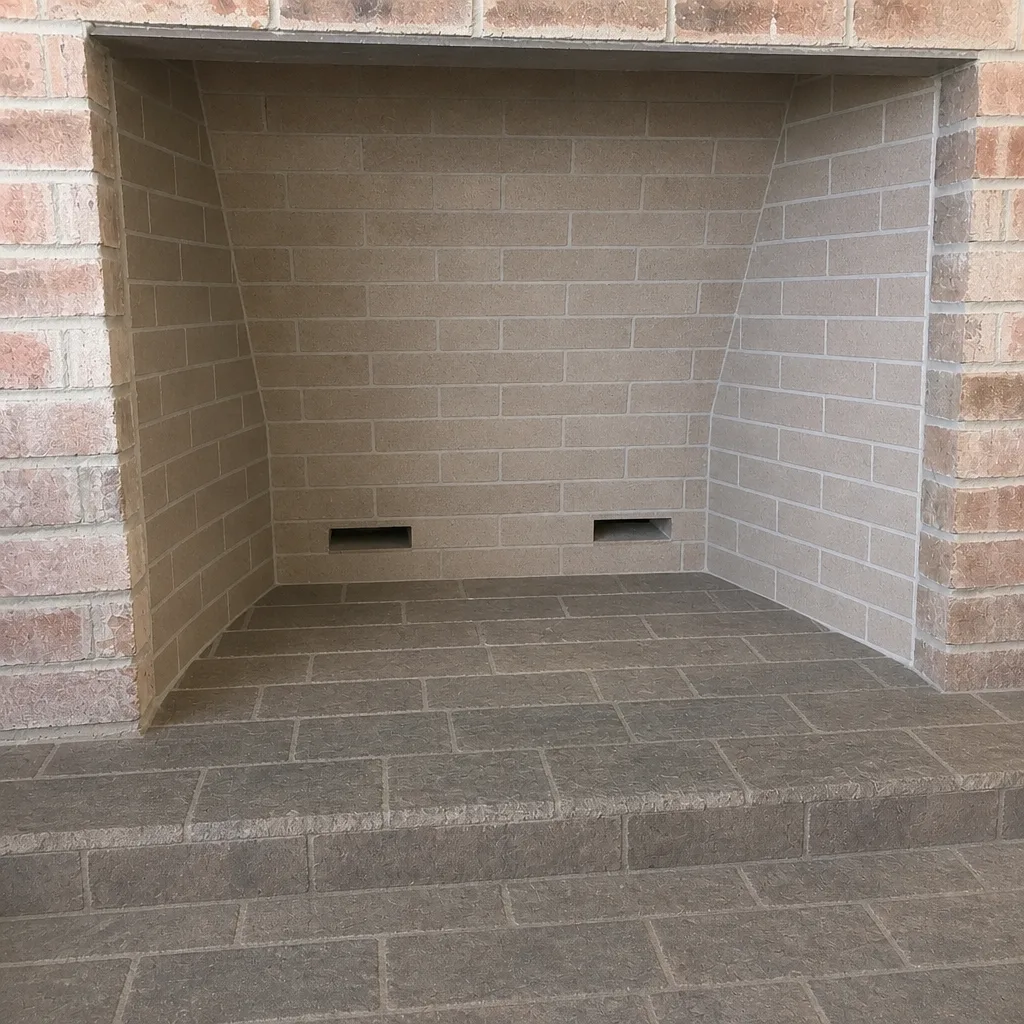
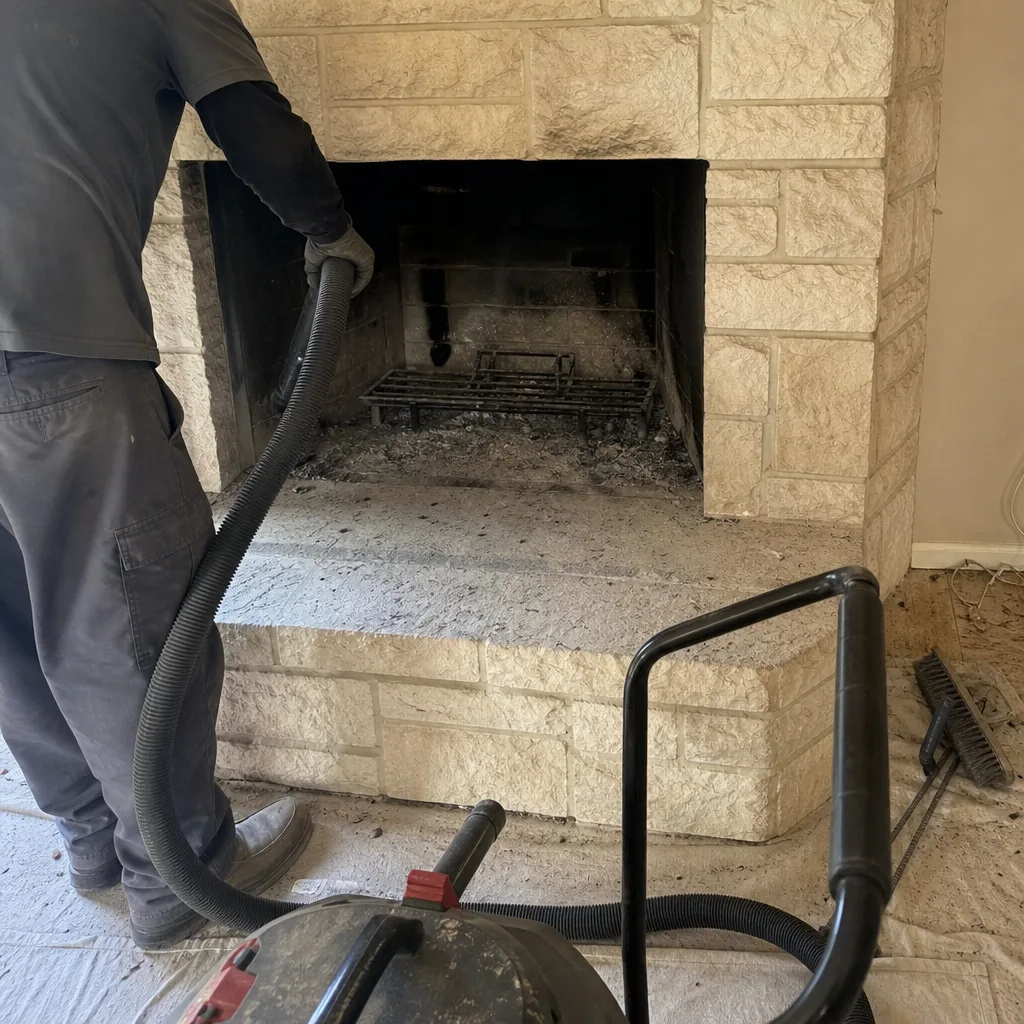
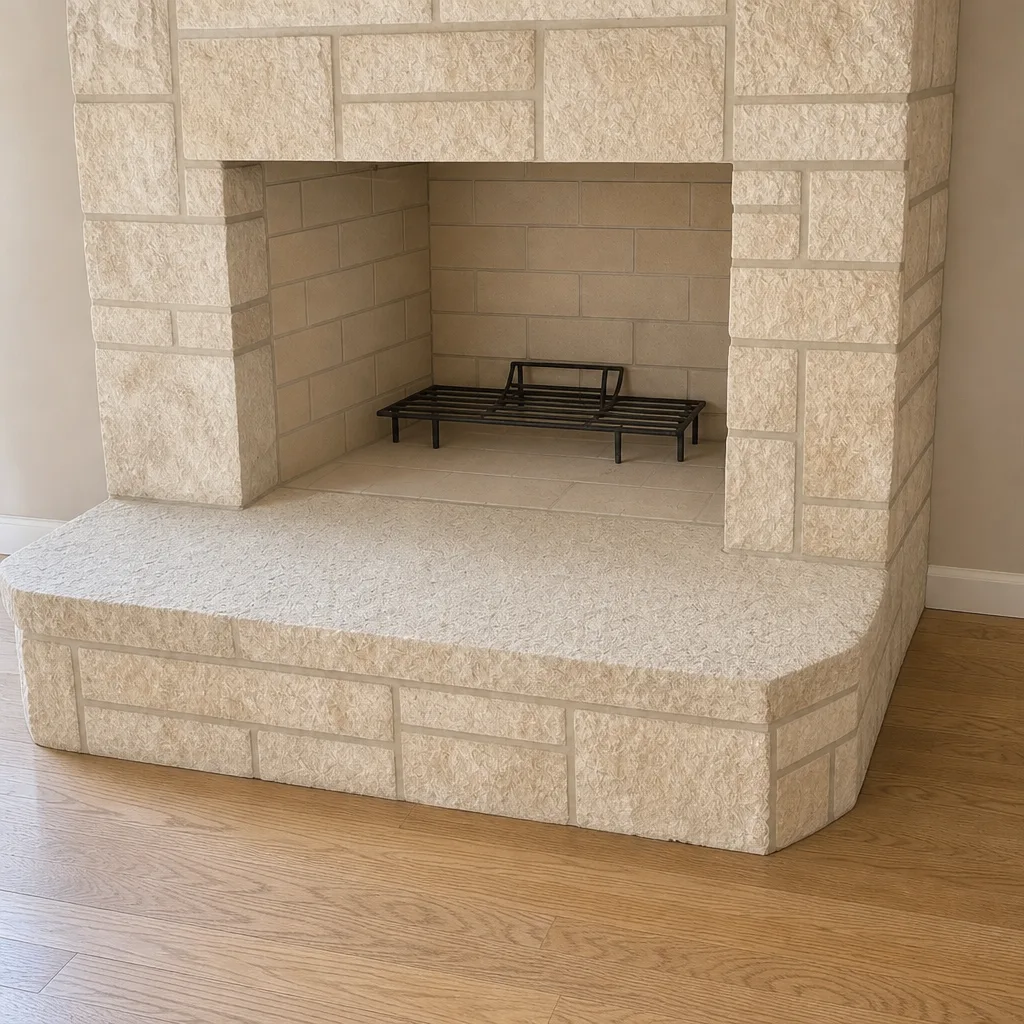
See the difference
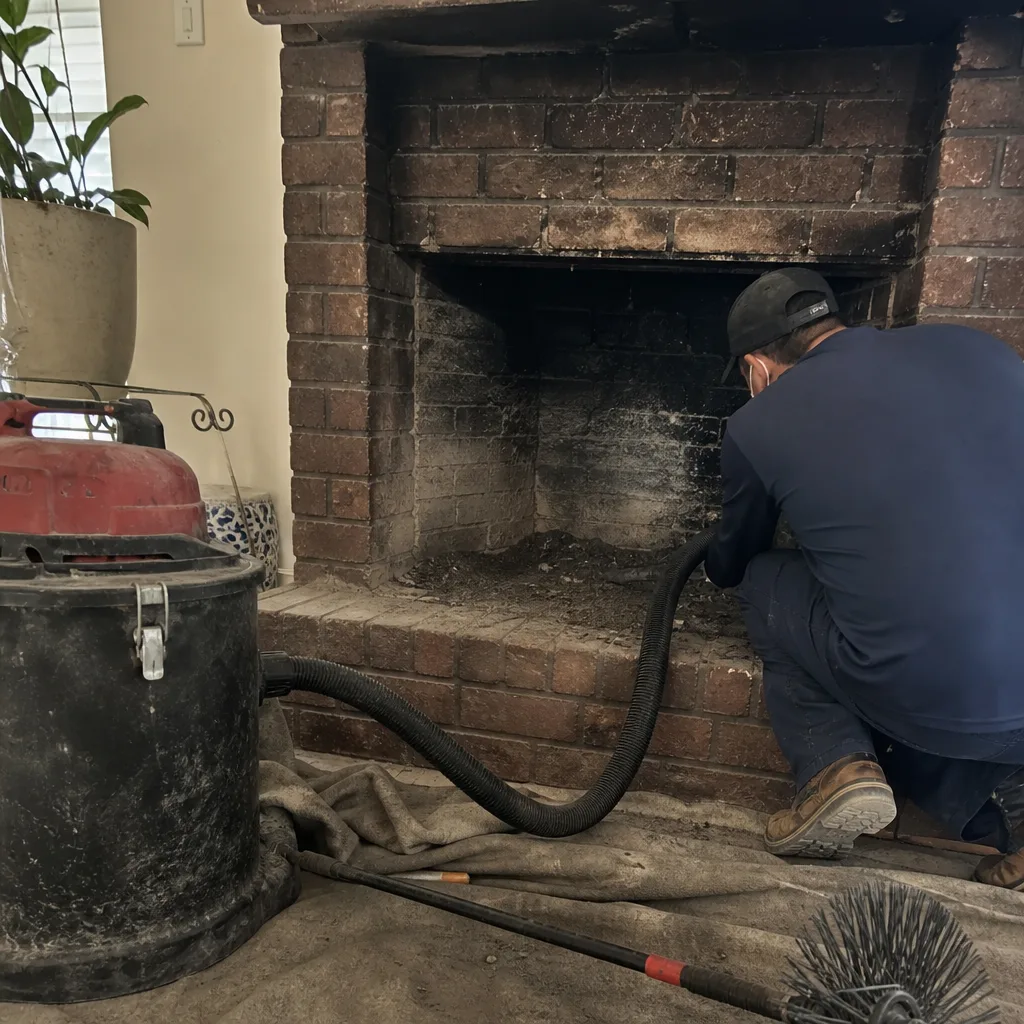 Before
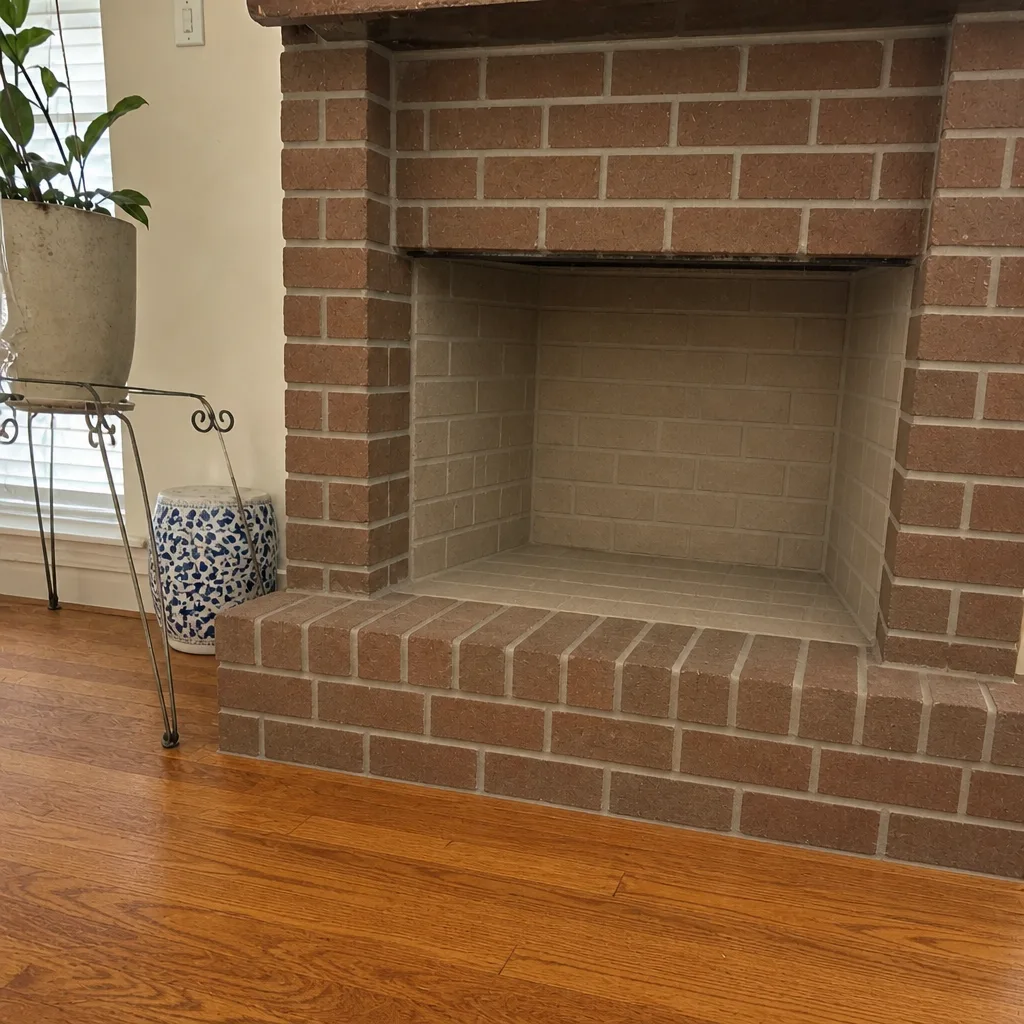 After
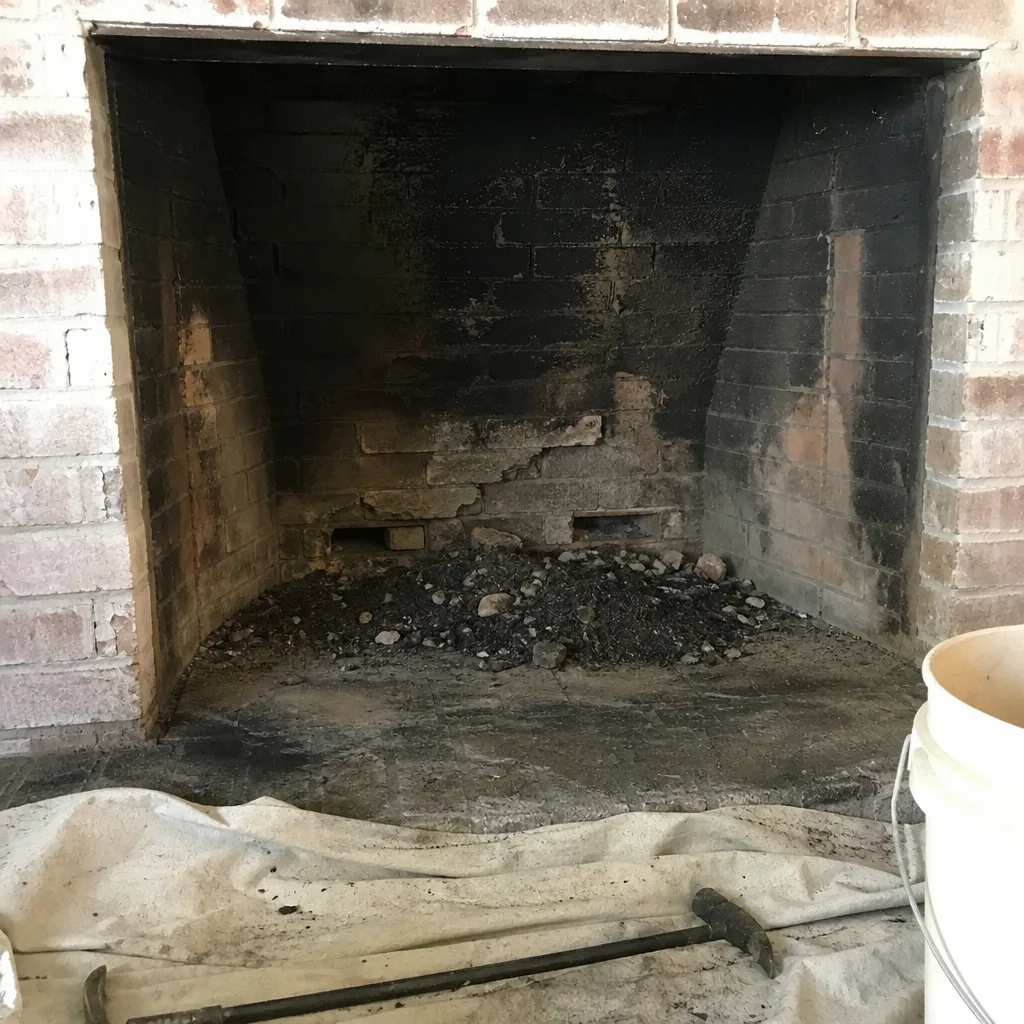 Before
 After
 Before
 After
When to Call a Professional
Some tasks belong on your calendar; others belong on ours. Call a professional if you smell creosote or smoke in the house when the fireplace isn’t running, if you see cracks in the flue or firebox, if the cap or crown is damaged or missing after a storm, if you’ve had a chimney fire (even a small one), if the fuel type has changed, or if you’re buying a home with a chimney. Those are all triggers for the annual schedule to shift forward.
If you’re not sure where your system sits on the calendar, a single chimney sweep visit will tell you, and we also do the chimney cap & crown work if the inspection finds a problem there. Chimney Sweep Sharpstown offers free estimates in Sharpstown. Call (833) 991-8956. We answer 24/7. Fast dispatch from 7am to 7pm, Sunday through Friday.
Frequently Asked Questions
Wood-burning chimneys should be swept once a year, and oil-fired chimneys should be swept once a year even if you barely use them, because acidic sulfur deposits build up regardless of usage. Gas fireplaces need a sweep every 2-3 years unless debris or bird activity is detected during the annual inspection. In every case, the annual inspection is separate from the sweep and should happen every year. Call (833) 991-8956 for an exact quote on a sweep and inspection. Estimates are free.
Yes, and it’s the inspection rather than the sweep that catches the problems you can’t see. Cracks in the flue, a deteriorating crown, and corrosion inside a gas flue are all things that look fine from the firebox. An annual inspection is how those get caught while they’re small. Call (833) 991-8956 to schedule one. Estimates are free.
Creosote keeps building, moisture keeps reacting with it, and the flue keeps deteriorating, and the first sign you notice may be a smell, a draft problem, or a repair quote much larger than the sweep would have been. A chimney fire is the serious risk that skipping maintenance leaves on the table, and a blocked or deteriorated flue is the path to carbon monoxide entering the house. None of that is a reason to panic; it’s a reason to put the annual schedule in place. Call (833) 991-8956 and we’ll tell you exactly where your system stands. Estimates are free.
September is the best window in Sharpstown because it clears creosote before the humid shoulder season reactivates it and reveals any deterioration summer caused with enough time to repair it before the first fire. It also puts your inspection ahead of the fall scheduling rush. Call (833) 991-8956 to book a September slot. Estimates are free.
A Level 1 is a visual check of everything you can reach and see, done alongside the annual sweep. A Level 2 adds a camera inspection of areas you can’t see, and it’s the level you need after a chimney fire, a fuel change, a home purchase, or a structural event. If you’re not sure which applies, describe the situation when you call (833) 991-8956 and we’ll tell you. Estimates are free.
Yes. Chimney Sweep Sharpstown does both, so the sweep and inspection report translate directly into repair work, with no referral to a separate mason or contractor. That means a DuraFlex relining, HeatShield resurfacing, or a Gelco or Olympia Chimney cap replacement can all be handled by the same team that did the inspection. Call (833) 991-8956 for a free estimate.
The Bottom Line
“Once a year” is the floor, not the schedule. The real maintenance calendar runs on fuel type, usage, and climate. Wood-burning systems need an annual sweep plus a Level 1 inspection; gas systems need an annual inspection and a sweep every 2-3 years; oil systems need an annual sweep regardless of use. In Sharpstown, the sweep belongs in September, not spring, because summer humidity reactivates dormant creosote and hides new deterioration. The tasks between visits, the monthly damper check, the post-storm cap and crown look, and the spring mortar walk-around, are what stop small problems from becoming large ones. Put the four clocks on the fridge, note what you check and what a sweep checks, and the annual visit becomes a routine confirmation rather than a rescue. For the sweep, the inspection, and any repair the inspection uncovers, Chimney Sweep Sharpstown is the one call. Call (833) 991-8956 for a free estimate. We answer 24/7. Fast dispatch from 7am to 7pm, Sunday through Friday.
Written by the team at Chimney Sweep Sharpstown.