
Last updated November 24, 2026
 Sweep & inspection
 Caps & crowns
 Flue relining
 Masonry repair
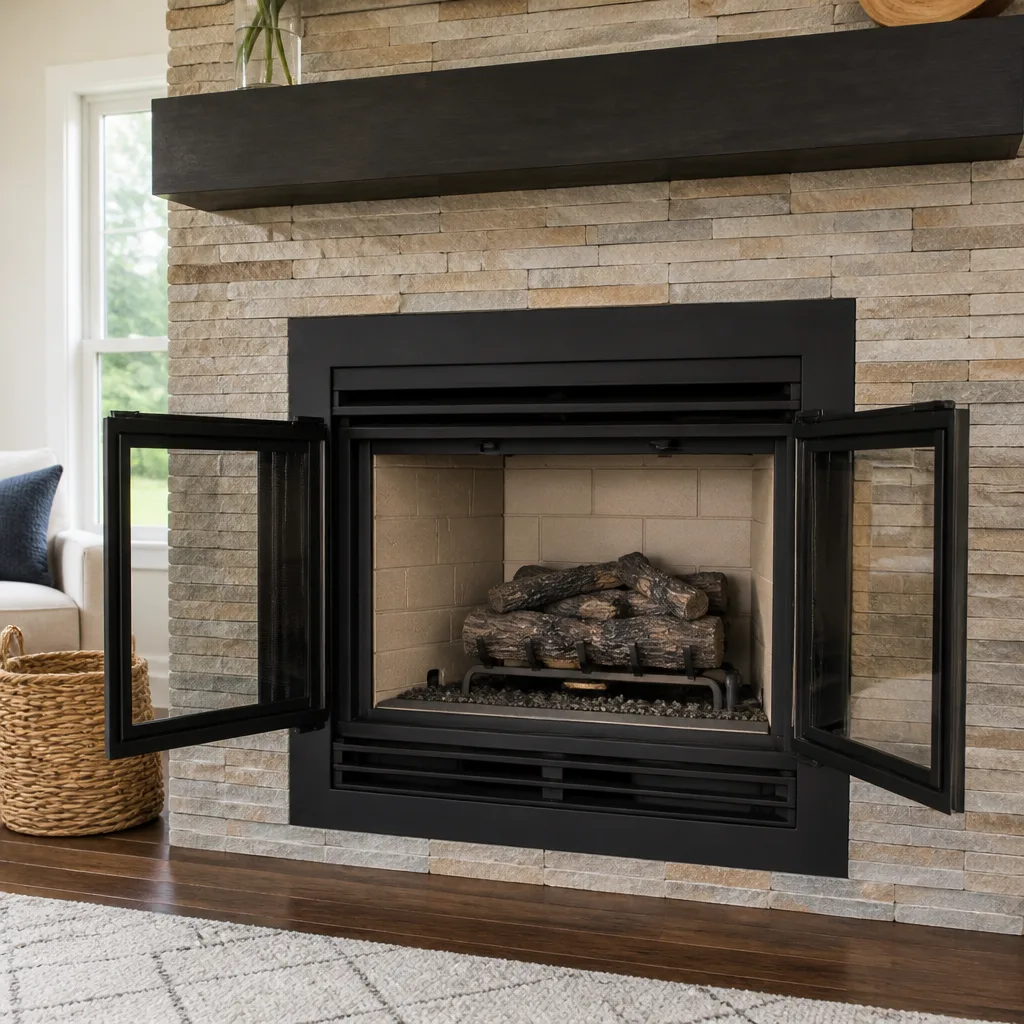 Gas fireplace service
Level 1 sweep and inspection to the NFPA 211 annual standard - flue, crown, cap, and flashing checked and photographed
Chimney sweep logs do not sweep chimneys. They loosen some creosote - which then falls where a brush and vacuum still have to collect it.
Chimney Cleaning Warning Signs: A Sharpstown Homeowner’s Reference Guide
Most chimney warning signs Sharpstown homeowners notice are symptoms that arrive late. The white stain streaking the exterior brick isn’t cosmetic. It’s efflorescence, and it means water has been moving through the masonry long enough to dissolve mineral salts and carry them to the surface. Whatever you’re seeing now, the cause behind it usually started more than one season ago. This guide works backwards from the symptom to the actual component responsible, so you can tell what needs a cleaning soon and what means don’t light the fireplace until someone qualified looks at it. We’ll cover Sharpstown specifically: the brick stains that are common on this era of Houston-area construction, the difference between a smoky smell that means creosote and one that means draft reversal, and the signs you can check from the driveway.
Quick Answer
The main chimney cleaning warning signs are heavy creosote buildup, a smoky smell that returns after cleaning, water staining or efflorescence on the exterior brick, a spalling crown, a stuck or missing damper, and visible soot or glaze in the flue. Signs you can wait on include a light odor after a season of burning and minor soot at the firebox. Signs that mean stop burning now include glazed creosote, a cracked flue tile, soot falling into the firebox, ceiling staining, or a strong gas smell. Call (833) 991-8956. We answer 24/7.
Styles & brands we work with
- Sweep & inspection
- Caps & crowns
- Flue relining
- Masonry repair
- Gas fireplace service
Table of Contents
- Why Warning Signs Show Up After the Problem Starts
- Efflorescence and Staining on Sharpstown Brick
- Smoky Smell vs. Draft Reversal: Two Very Different Causes
- Warning Signs You Can Check From Ground Level
- What the Firebox and Ceiling Are Telling You
- Clean Soon vs. Do Not Use: A Symptom Triage
- Creosote Grade and Why It Matters
- How Often to Schedule a Chimney Sweep in Sharpstown
Why Warning Signs Show Up After the Problem Starts
Chimney problems rarely announce themselves on day one. A chimney is a working system with a firebox, flue, liner, cap, crown, and flashing at the top. When one component slips, the rest compensate until they can’t. A hairline crack in a flue tile lets moisture in slowly. A cap that shifted two inches in a wind storm lets rain hit the liner top directly. Neither issue produces an immediate smell or a visible problem at the fireplace. What produces those is the downstream effect, sometimes one or two burning seasons later.
In our experience across Sharpstown, this is why so many homeowners call the moment something is visible. The visible thing is the last link in a chain, not the first. That matters for how you spend money. If a symptom gets treated as a cosmetic issue, the cause keeps working, sometimes for years, until the repair is much larger than it needed to be.
Here’s what each major warning sign is really pointing at:
- Smoky smell after a cleaning: often creosote that has soaked into the masonry, or a flue that isn’t drafting hard enough.
- White staining on exterior brick: efflorescence, which points to a water path through the crown, flashing, or liner.
- Rusted damper or firebox metal: moisture is getting in from above and running down the flue.
- Visible smoke in the room: draft reversal, an obstruction, or a flue that’s too narrow for the firebox opening.
- Soot falling into the firebox: loose or glazed creosote breaking away, or a flue liner that has cracked.
- Damper that won’t close: rust, soot bridging, or a mechanical failure that lets warm air and rain straight down the flue.
- Crown that’s spalled, cracked, or tilted: water intrusion that will move down into the brick next.
Working backwards from symptom to cause is what a proper chimney inspection does. The best version of it isn’t a sweep that hands off repair to a mason. That’s the split we’re fixing with our Chimney Sweep Sharpstown setup: what the inspection finds, we handle.
Efflorescence and Staining on Sharpstown Brick
If you’re reading the outside of your chimney and see a white, powdery stain, that’s efflorescence. It’s not mold. It’s not a paint failure. It’s mineral salt that was dissolved by water moving through the masonry and then left behind on the surface as the moisture evaporated. It’s a water-access issue at heart. Where the water is coming from determines how big the fix will be.
Houston’s humidity and warm Gulf air make chimney brick porous in a way that shows efflorescence more visibly than in drier climates. The brick itself isn’t defective. It’s doing what masonry does: absorbing and releasing moisture. The problem is where the water gets in. A chimney with an intact crown and proper flashing gets wet on the outside and dries. A chimney with a failing crown or a gap in the flashing gets water into the flue structure itself, which is a very different situation.
Where to look first, top-down:
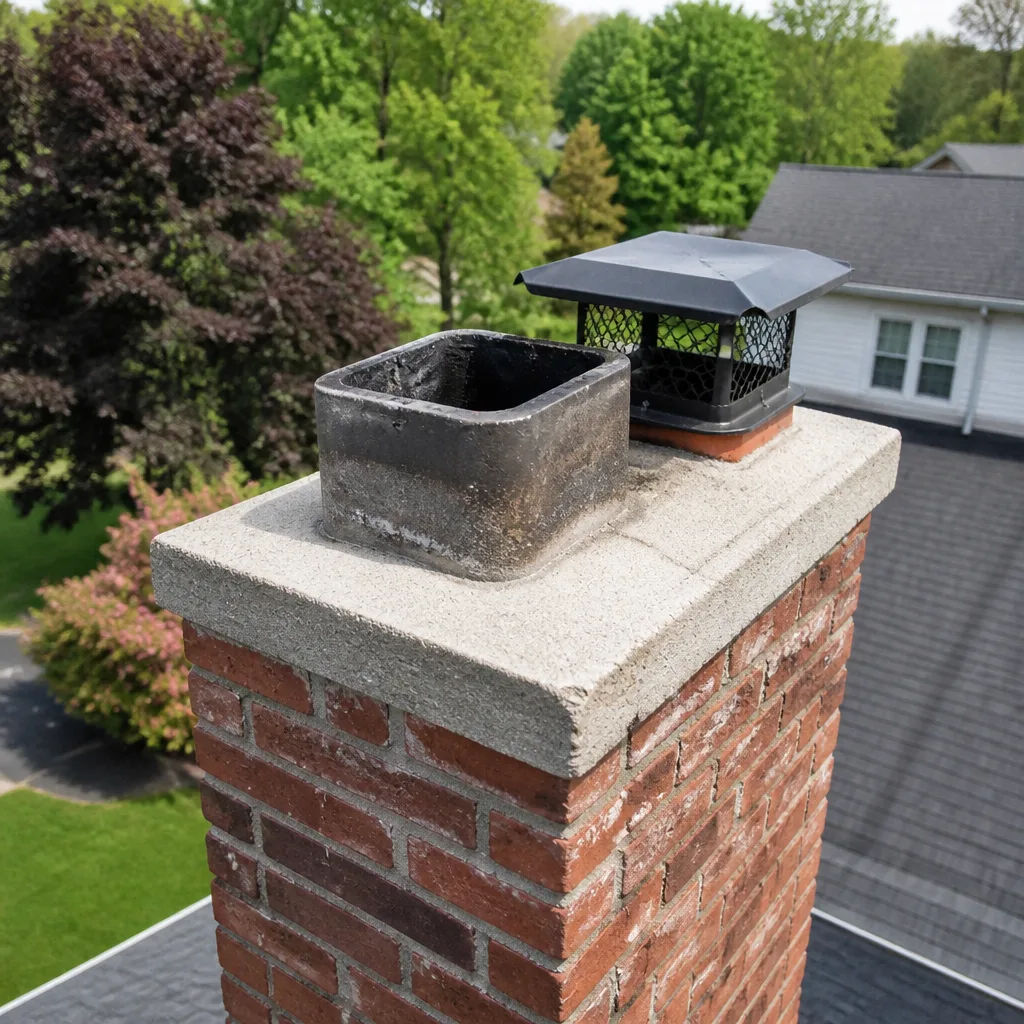
- Crown and cap. Cracks wider than a hairline, missing mortar at the crown edge, or a cap that’s shifted are the usual suspects. A purpose-made cap with proper screening does more to keep water out of the flue than a length of pipe with a screen does. That’s why we install chimney cap & crown components from Gelco and Famco rather than generic hardware.
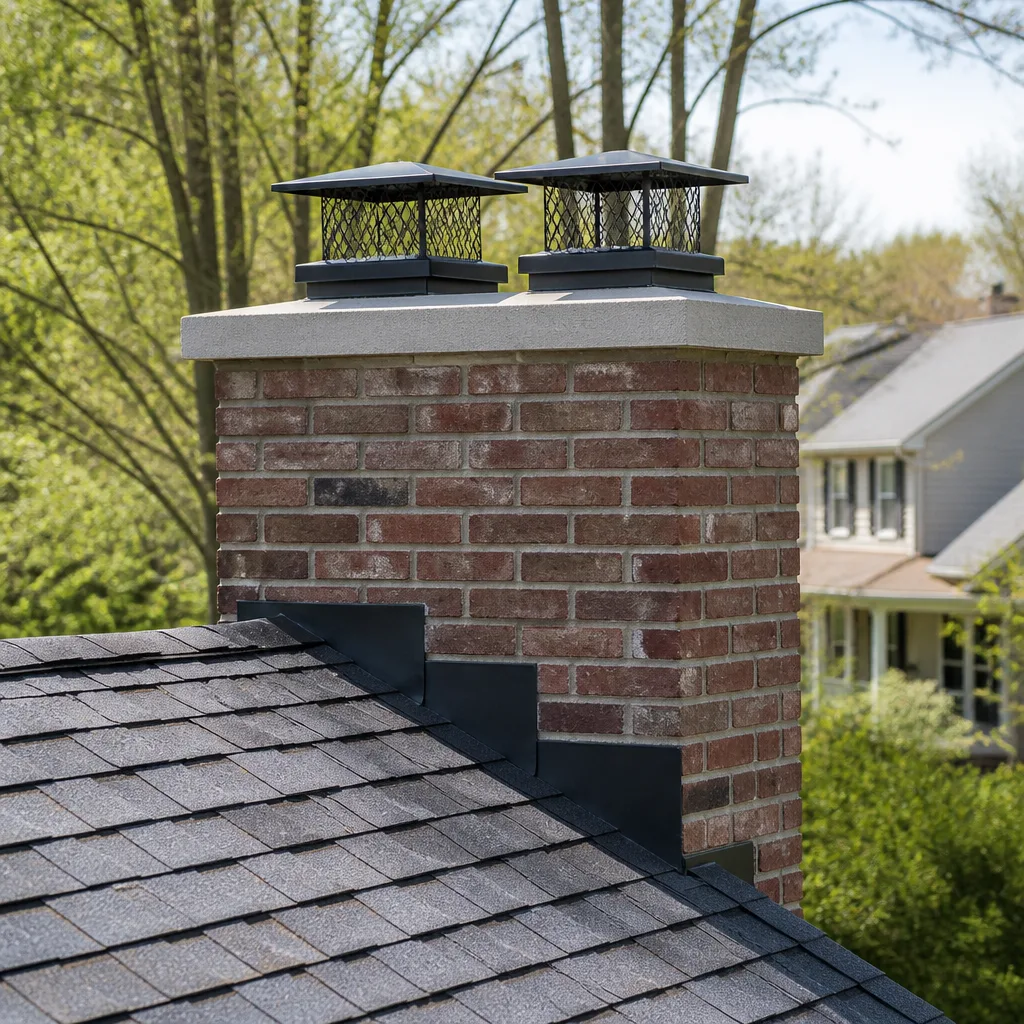
- Flashing. The metal at the roof line where chimney meets shingle. If the sealant has failed, water can run behind the brick from below.
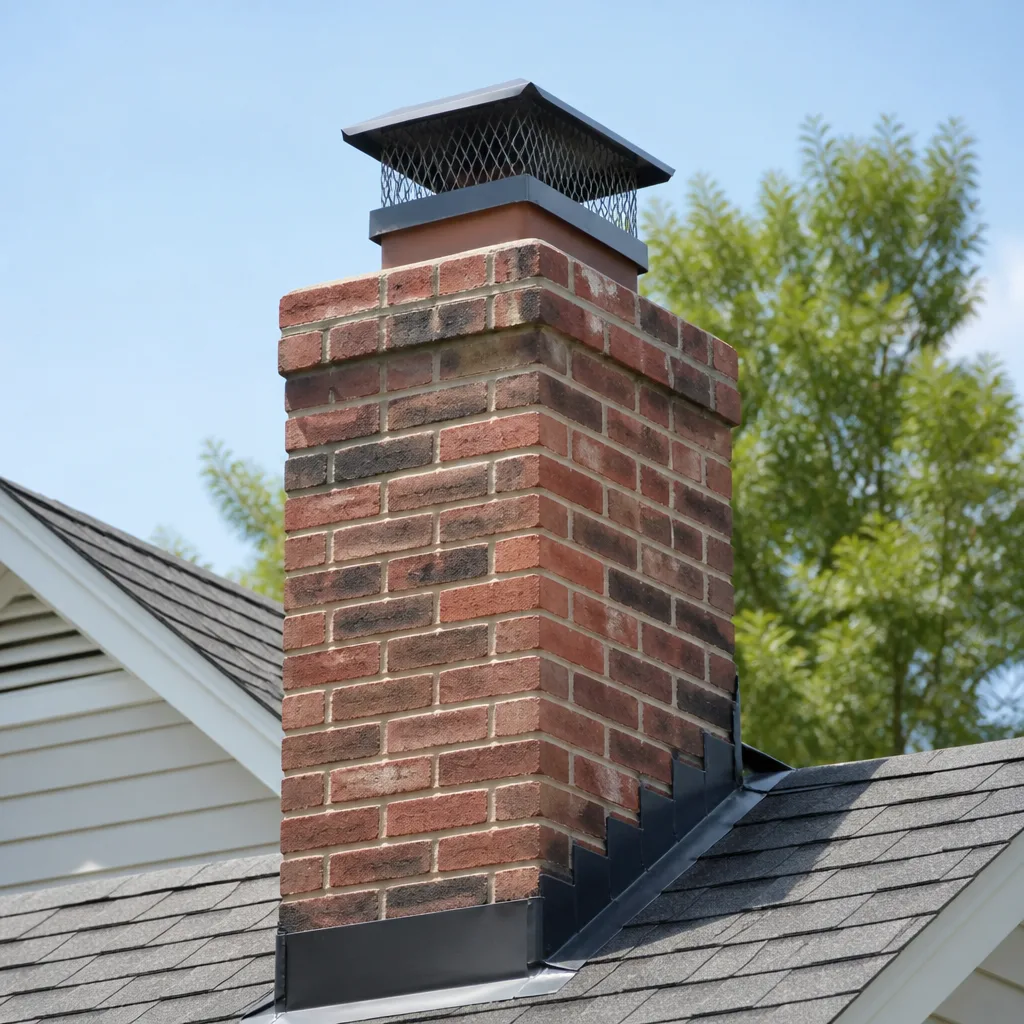
- The masonry joints. Deteriorated mortar admits water into the brick body, which is where salts come from in the first place.
- The flue itself. If the liner has cracked, moisture from the firebox side can also reach the masonry and drive efflorescence from the inside out.
Efflorescence on its own isn’t dangerous. What sits behind it usually is. A crown that’s failing today will admit enough water over a few winters to break down mortar joints and start working into the flue. When you call in Sharpstown about staining on the chimney’s exterior, the inspection is really aimed at the top of the system, not the stain.
One useful detail when you’re reading your own chimney: efflorescence wipes off easily and comes back; a dark stain that doesn’t wipe off is different. Dark staining near the top of the chimney often means creosote or smoke has been exiting the flue in a way it shouldn’t, which points at draft issues. White and powdery is water. Dark and greasy is fire.
Smoky Smell vs. Draft Reversal: Two Very Different Causes
A smoky smell in the house means one thing to most people: “I need a cleaning.” Sometimes that’s exactly right. Sometimes it’s the opposite, and a cleaning doesn’t fix it.
Smell that comes from the chimney itself
If the smell is strongest on warm afternoons, or the first cool mornings after a stretch of summer heat, or on humid days with the windows closed, it’s drawing from the flue. The cause is usually creosote that has soaked into the flue tile or masonry. As the air temperature changes, that creosote off-gasses, and the smell reaches the room. A proper sweep removes the surface creosote, and a professional inspection tells you whether it soaked in deeper. When the flue surface is compromised but still structurally sound, HeatShield ceramic resurfacing is often the right answer. It seals the flue interior, which addresses both the smell and the pathway that let the creosote in.
Draft reversal: the smell is coming from the room, not the flue
A different smell pattern points elsewhere. If you smell smoke while the fire is burning, if smoke rolls back into the room when you open the glass doors, or if you can feel air pushing down the chimney on a cold morning, that’s a draft reversal. The chimney isn’t pulling air up it. Something else in your house is pulling the air in the opposite direction.
In Sharpstown homes, and especially in tightly constructed newer homes with central HVAC moving a lot of air, this is common. A kitchen exhaust fan, a bath fan, or a clothes dryer running at the same time as a fire can pull enough negative pressure in the house to overpower the chimney’s natural draft. The result isn’t a dirty chimney. The result is a pressurization problem. Cleaning won’t fix it. What fixes it is diagnosing the airflow: checking the flue size against the firebox opening, adding a chimney cap designed to help draft, opening a nearby window during lighting, or in complicated cases, adding a draft-assist solution.
How to tell which one you have
- Smell when no fire is burning: usually creosote or moisture-driven odor. Cleaning and inspection.
- Smell only while a fire is burning: usually draft reversal or obstruction. Diagnostic inspection.
- Smell that persists after the fire and fades slowly: often a combination. Both issues need checking.
- Smell mixed with water staining: water intrusion into the flue. Inspection needed before the next fire.
A proper inspection tells these apart in a single visit. NFPA 211-style visual checks catch the creosote question; a Level II-style inspection goes further, using a camera to look at the flue interior where the smell usually starts. We do both, and we connect the finding to the repair. Fixing the cause, not just the smell, is what stops it coming back next season.
Warning Signs You Can Check From Ground Level
Before you climb anything or call anyone, there’s a short walk-around that tells you a lot. These aren’t repair diagnoses, they’re triage markers. Anything you spot on this list is worth mentioning when you call.
- The exterior of the chimney. White powder or streaks (efflorescence). Dark stains near the top. Loose or missing brick. Crumbling mortar joints. Any of these means water is moving where it shouldn’t be.
- The top of the chimney, from a distance. A tilted crown, a cap that’s shifted off-center, or a cap that’s not actually present. A missing cap is the single most common cause of water damage we see in Sharpstown because a flue with no cap at the top is an open pipe to the sky.
- The chimney where it meets the roof. Missing or rusted flashing. Flashing is the metal layer that keeps water from running behind the masonry. If the flashing is loose or the caulk line is cracking, water is getting in from the roof side, not the top.
- The wood frame and siding near the chimney. Any rot, bubbling paint, or dark staining on the siding adjacent to the chimney points at a leak coming from the chimney itself.
- The roof for damaged shingles near the chimney. A damaged shingle or two near the chimney is often a chimney leak, not a roof problem. If shingle damage keeps coming back in the same spot, the chimney is the source.
- The telltale line on the ceiling. A faint ring or brownish streak on the ceiling near the chimney chase means water is coming down inside and reaching the drywall.
What you can’t see from the ground: the flue interior, the condition of the damper, whether the liner has cracked, and how much creosote is on the flue walls. Those need a camera inspection. That’s the reason a ground-level check is useful but not a substitute for inspection. When you see any of the six signs above, that’s the point to have someone look at the whole thing.
What the Firebox and Ceiling Are Telling You
Inside the house, the fireplace and the walls around it are the second-best diagnostic tool you have, after a camera. Here’s what to read.
The firebox itself
Cracks in the firebox brick or gaps in the firebox mortar are signs that the firebox lining is failing. This isn’t cosmetic. The firebox is designed to contain fire and heat inside the fireplace. If the lining has failed, heat can reach the surrounding structure. Cracks wider than a hairline, missing mortar joints, or a firebox that’s begun to break apart are stop signs. Don’t burn until a professional sees it.
The damper
A damper that doesn’t open fully, sticks, or won’t close means air control is compromised. When the damper is stuck open, warm air from the house rises up the flue all summer. When it’s stuck closed, smoke has nowhere to go but the room. Both are worth fixing, and neither is a cleaning issue. Fireplace repair is what resolves that one, and it’s one of the five service categories we cover directly.
Soot patterns
Light, even soot in the firebox is normal for a working fireplace. Heavier soot at the top of the firebox, or soot falling back into the firebox, is a signal. Soot that falls is being knocked loose by something: a loose liner, glazed creosote breaking up, or an obstruction above. Don’t sweep it out and go on burning.
The ceiling and walls
A ring, streak, or discoloration on the ceiling near the chimney chase indicates a leak reaching the interior. That’s usually water coming from the crown or the flashing, running down the outside of the flue through the chase. Left alone, it does more than mark the ceiling: it saturates the chase framing and, in the worst cases, reaches the flue’s structural elements. Ceiling staining is the point where the inspection shifts from “just a cleaning” to “let’s find the water path.”
Carbon monoxide
This is the one warning sign that isn’t visible and isn’t smellable. A burning wood or gas fire produces carbon monoxide, which a properly drafting chimney vents outside. A blocked or reversed flue can vent it into the house instead. If you have a carbon monoxide alarm and it goes off, leave the house and call the fire department from somewhere else. That is not a chimney-cleaning problem, it’s a dangerous situation. A working CO alarm on every level of the home is worth having whether or not you own a fireplace. And if a chimney inspection ever uncovers a blockage or a draft problem, that’s the reason it matters: not to sell a cleaning, but because a working flue is what keeps combustion gas where it belongs.
Clean Soon vs. Do Not Use: A Symptom Triage
Some signs mean schedule a cleaning. Others mean don’t light a fire. Getting this wrong is how a minor repair turns into a major one. Here’s the simplest sort we know.
Schedule a cleaning soon
- Smoky smell from the flue when no fire is burning
- Visible soot buildup visible at the top of the firebox
- A full burning season or more since the last sweep
- Dark staining near the top of the chimney, suggesting smoke is exiting the flue oddly
- A damper that’s stiff but still moves
Do not use this fireplace until a professional inspects it
- Glazed, shiny, or tar-like creosote visible on the flue walls
- Soot falling into the firebox
- Cracks in the flue liner or a flue tile visibly damaged from the top
- Cracks in the firebox brick or gaps in the firebox mortar
- Smoke entering the room while the fire is burning
- Ceiling staining or water damage near the chimney chase
- A carbon monoxide alarm that has gone off
- A strong gas smell from a gas-log fireplace or gas unit
The clearest way to think about this is by what the fire can do to a failing component. Glazed creosote reaching the flue liner is the one most likely to cause a chimney fire, because glazed creosote burns at high temperature and can crack the liner’s protection. A cracked firebox has heat meeting the surrounding structure without a barrier. Smoke entering the room means combustion gas isn’t going out. All three are reasons to stop burning and have someone look at the system before the next fire.
The good news: none of these are catastrophes if caught early. That’s the case for a Level II-style inspection with a camera, which is a diagnostic, not a sales visit. We do both visual and camera inspections and connect them directly to repair, so a found problem doesn’t leave you holding a report and no path forward. If the report says “clean it, then come back next season,” that’s a fine answer. If it says “resurface the flue,” that’s a scope of work we can complete the same week.
Creosote Grade and Why It Matters
Creosote is the residue left inside a flue by burning wood. It exists on a spectrum, and that spectrum is what makes chimney cleaning more than a cosmetic exercise. The National Fire Protection Association recognizes creosote in three grades, and each one points at a very different response.
- Grade 1, the light dusting. This is what a sweep removes easily with a brush. It’s soft, sooty, and flakes off. A chimney with only Grade 1 creosote is a maintenance cleaning. If you clean the flue before it goes further, this is where you want to stop the process.
- Grade 2, the hardened deposit. This is what many Sharpstown chimneys reach after a couple of heavy burning seasons. It’s harder, sticks to the flue wall, and doesn’t come off with a brush alone. A sweep with the right tools removes most of it, but the residue that remains on the flue wall is worth watching. This is where HeatShield resurfacing enters the conversation, because it coats the flue interior and stops the hardened creosote pattern from recurring.
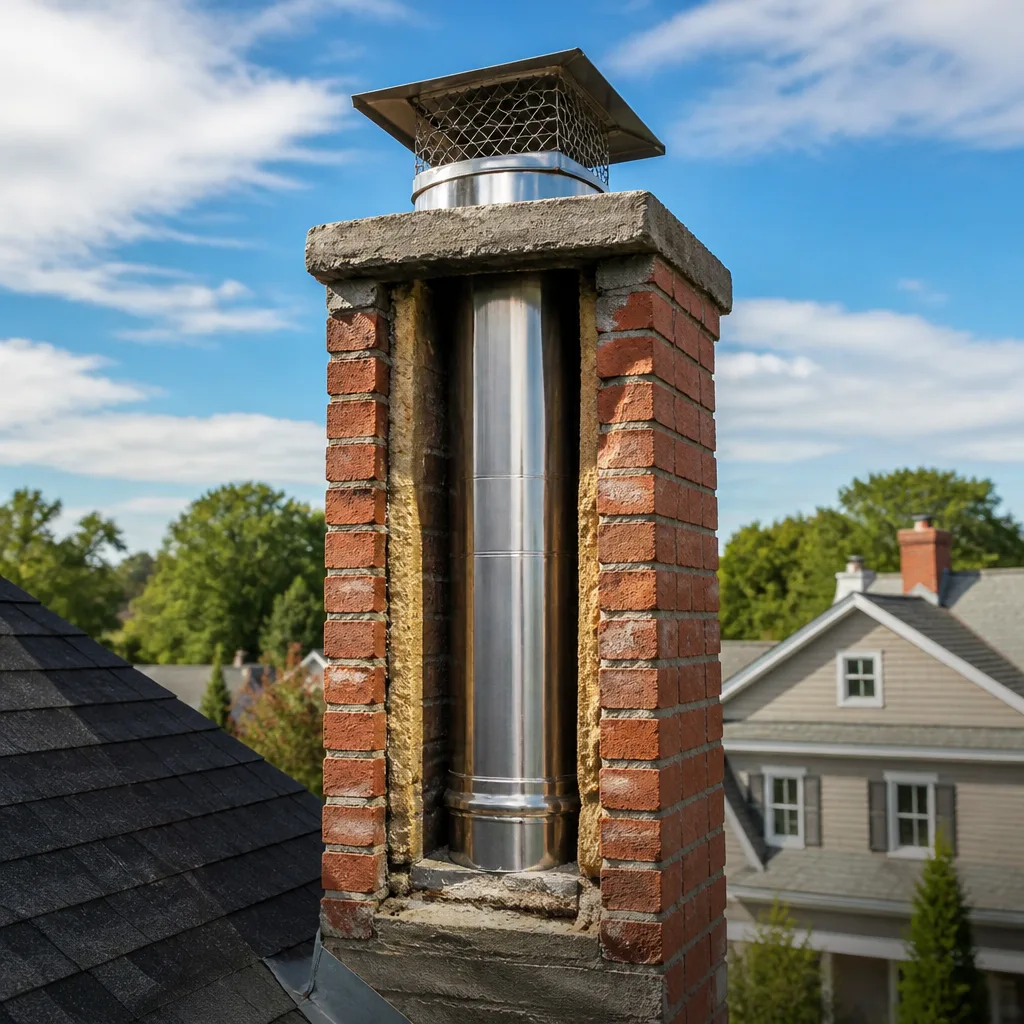
- Grade 3, the glazed and hardened tar. This is the dangerous one. Grade 3 creosote is shiny, tar-like, and extremely flammable. It burns at high temperature and can damage a flue liner. It’s the main reason chimney fires happen. A chimney with Grade 3 creosote is a “do not use” situation, and the fix is often more than a cleaning. It can be professional-grade mechanical removal, or a DuraFlex flexible liner system installed inside the existing flue, depending on the condition of the flue behind it.
Why burning habits matter here: slow, cool, smoldering fires produce more creosote than hot, efficient ones. Burning unseasoned wood produces more. A fireplace used occasionally for ambiance produces less creosote than one used as a primary heat source. In Sharpstown, where winters are mild and most fireplace use is shorter and less intense, Grade 3 creosote is less common than in colder climates. But it does happen, especially in fireplaces that haven’t been swept in several seasons and that see long, slow burns in the cooler months.
This is exactly the kind of thing you can’t read from the outside of the chimney. Creosote grade is a flue-interior question, and the answer comes from a camera inspection with a sweep. Booked together, sweep and inspection mean you walk away knowing what’s in your flue, with the findings documented in a photo report you can see for yourself. Not a “trust us, you need X.”
How Often to Schedule a Chimney Sweep in Sharpstown
The general rule in the chimney trade: a chimney should be swept when it needs it, and “when it needs it” is measured in creosote buildup, not calendar time. A useful rule of thumb is one inspection per year for every chimney in active use. The sweep itself is done when the inspection shows 1/8 inch of creosote or more, or whenever a home changes hands (a new owner should have the flue checked before the first fire, no matter what the previous owner said).
Sharpstown has one specific wrinkle: most fires here are shorter and less frequent than in colder parts of the country. That means a fireplace might see less creosote in a year than a house in the Northeast gets in a winter. It also means a homeowner can go years without realizing the flue has a slow-growing problem because nothing forces them to look. The inspection interval isn’t really about cleaning; it’s about catching a crown, cap, or flashing problem before it becomes structural.
A sensible annual schedule for a Sharpstown home with a working fireplace:
- Early fall. Book the sweep and inspection before the first cool nights, so you know what’s in the flue when you want to use it. A September slot beats a November one.
- After the fire season. A short spring check catches anything the winter pushed further: creosote that reached a higher grade, a damper that’s stiffened, or a crown that cracked.
- After any chimney fire, however small. Even a brief, self-extinguished chimney fire can crack a flue liner. This isn’t a wait-and-see. The flue needs to be looked at before the next fire.
- After significant roof work, a storm, or a chimney-adjacent repair. Flashing and cap can shift. Have the top of the system checked.
- Before buying or selling a home with a fireplace. An inspection that finds nothing is a selling point. An inspection that finds a flue issue is far better known before closing than after.
Two of those needs are diagnostic (inspection) and three are service (sweep plus whatever’s found). We handle the sweep and the repair in one visit, which is what makes the schedule actually work. If you’ve been told you “need repairs” by someone who left with a report and no way to complete them, this is the gap we close. Our chimney sweep and inspection visit includes a documented photo report of what we see in your flue. From there, if it’s a cleaning, that’s the whole job. If it’s a cap replacement or a crown rebuild, that’s the same visit or the next opening, not a referral to a contractor you have to vet yourself.
Our technicians have up to 14 years of experience with all three creosote grades, with caps and crowns, with dampers and fireboxes, and with relining through DuraFlex and resurfacing through HeatShield. That range is what lets us tell you honestly whether what the symptom suggests is small or large.
Common Mistakes to Avoid
- Treating a stain as a paint issue. Homeowners often paint over a stained chimney exterior. The efflorescence comes back within a season unless the source of the moisture is found. Look at the crown, the cap, and the flashing first.
- Using the fireplace after a chimney fire and assuming it’s fine. A self-extinguished chimney fire often leaves a cracked liner behind. The crack is where heat can reach the surrounding masonry, so the fire isn’t safe to use until the flue has been inspected.
- Burning green or wet wood. Unseasoned firewood generates more creosote per burn. Buying properly seasoned wood matters more than any single cleaning decision you’ll make this year. In Sharpstown’s humid climate, wood stored outdoors absorbs moisture quickly, so keep it covered and elevated.
- Ignoring a damper that won’t fully close. A damper that stays open through the summer lets warm, humid air rise into the flue and condense against cool flue walls. That moisture sets up creosote and reduces the next fire’s draft.
- Cleaning the firebox but never the flue. The firebox is visible. The flue is not. Sweeping the firebox floor solves the aesthetic problem and leaves the actual creosote in the flue where it matters.
- Hiring a sweep to clean and finding out later they don’t do repairs. A sweep that sweeps is half the job. If the cleaning reveals a problem, you want the same company to be able to complete the fix, not hand you a referral to a masonry contractor who isn’t coming until spring.
- Assuming gas fireplaces don’t need chimney work. A gas-log fireplace still has a flue, and the damper and venting can fail. Gas produces moisture as a combustion byproduct; a blocked flue can send CO into the room. Gas units are inspected, not just swept, and the cap and venting still need attention.
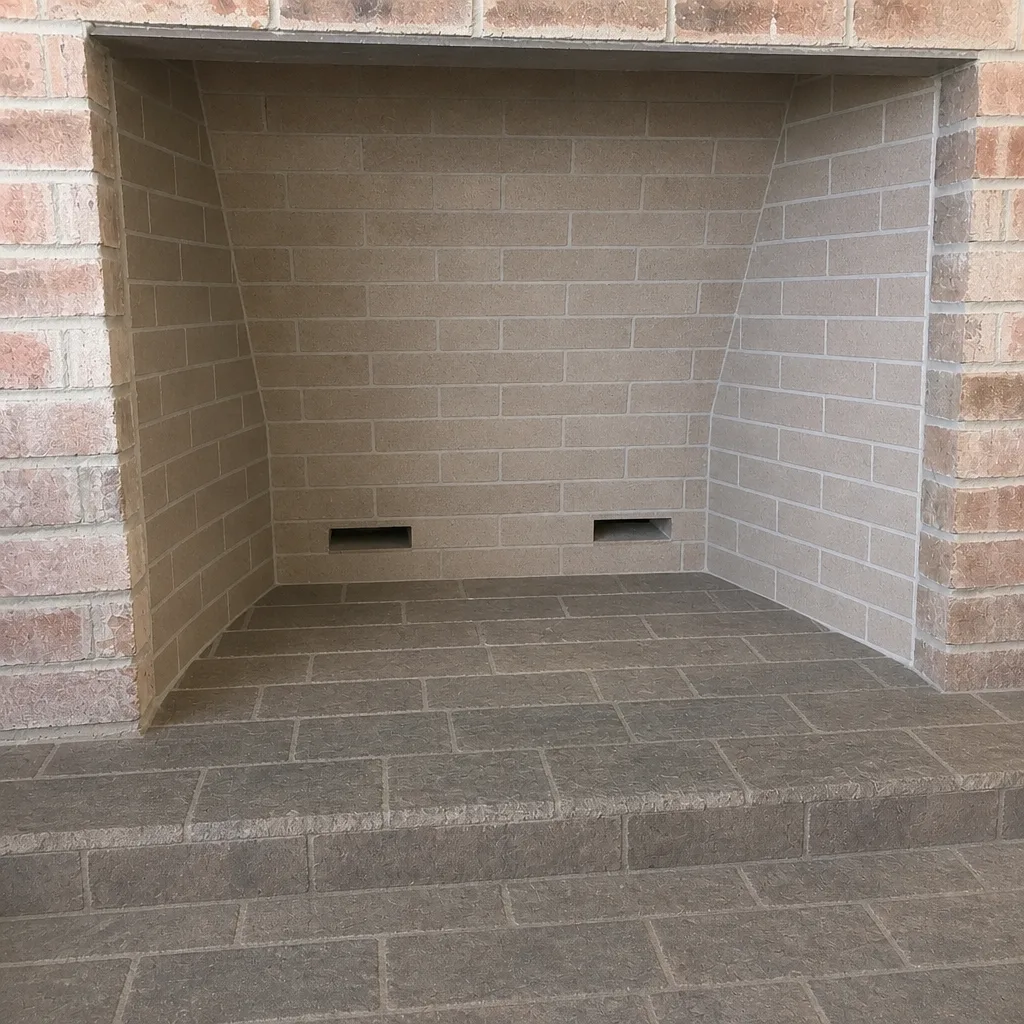
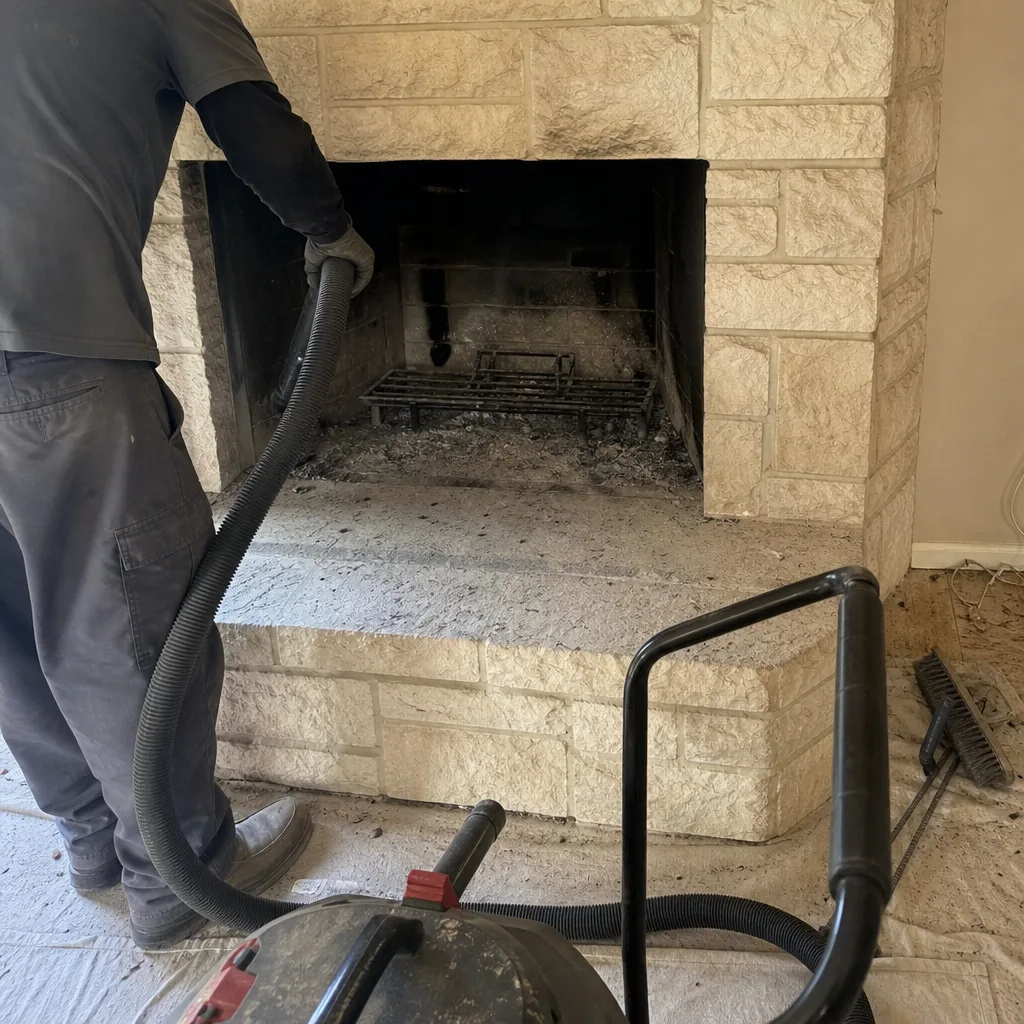
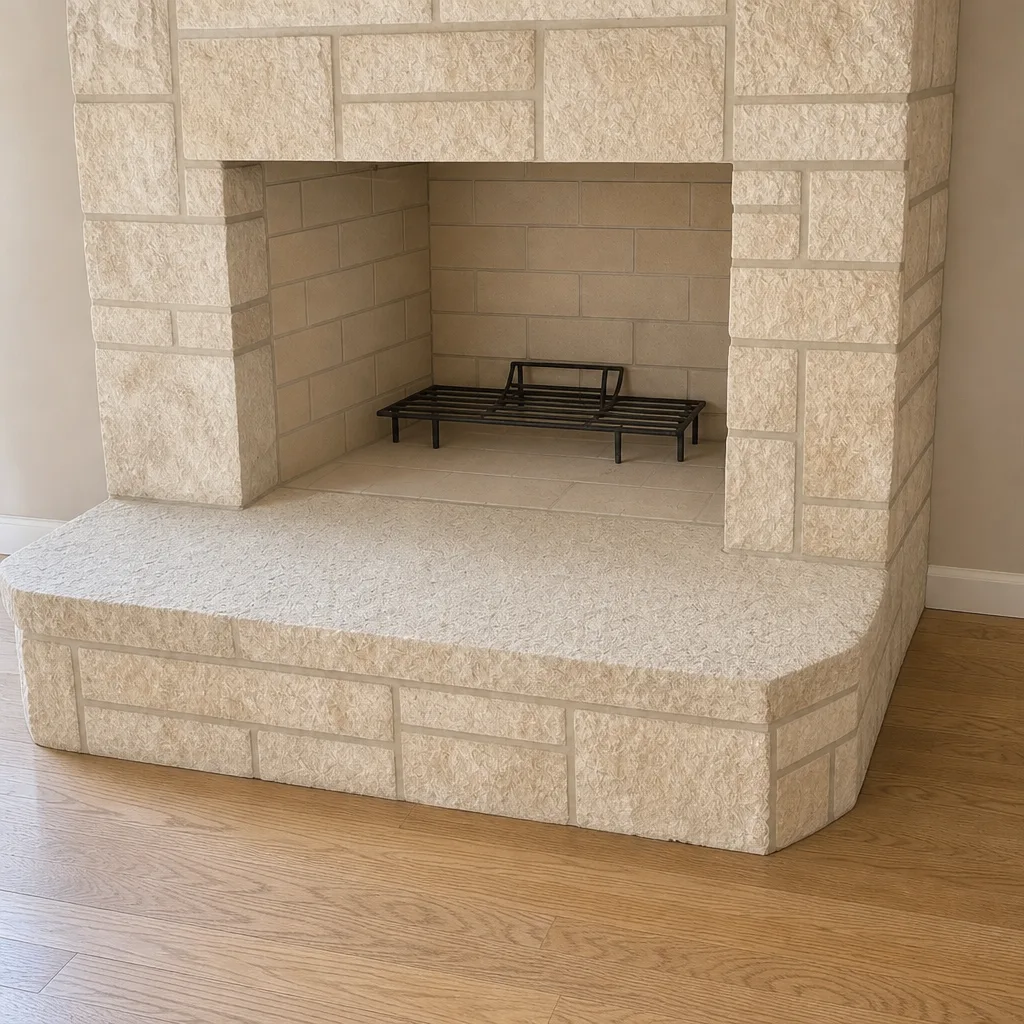
See the difference
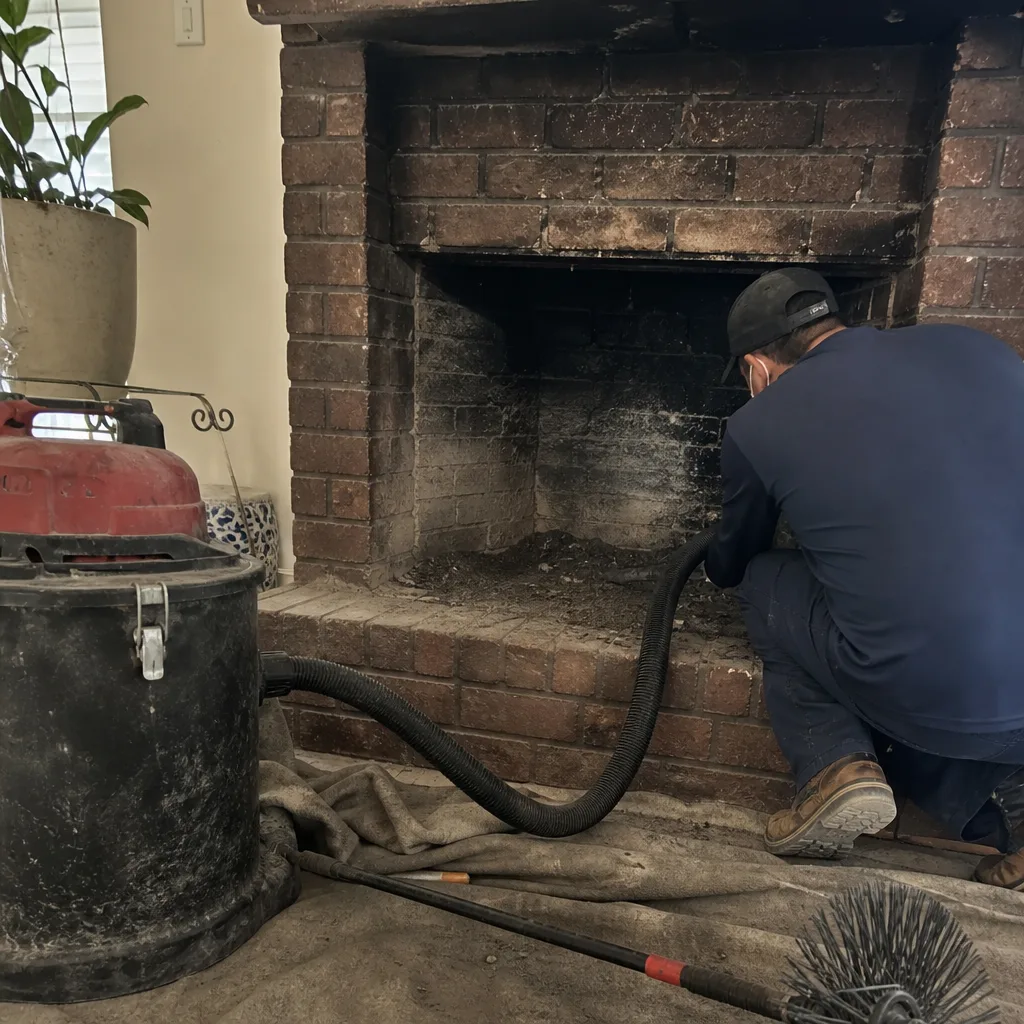 Before
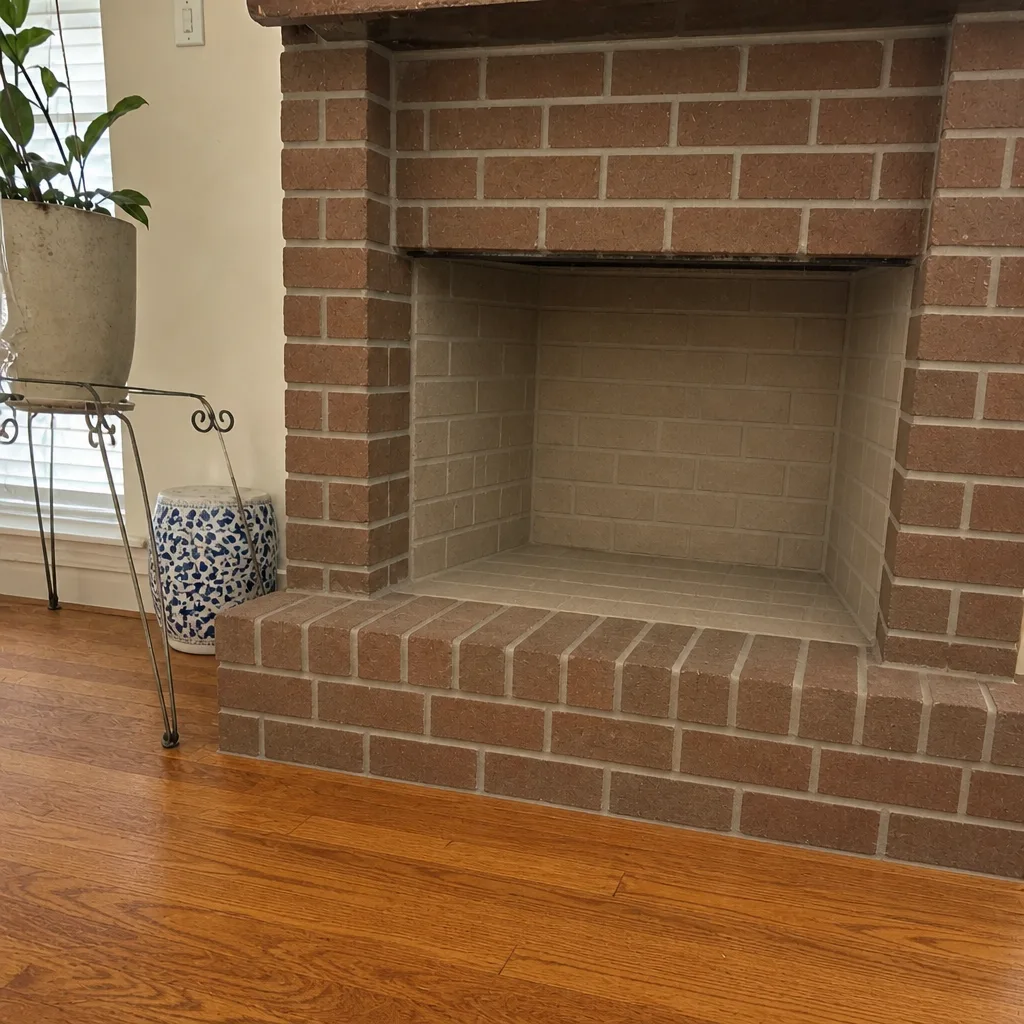 After
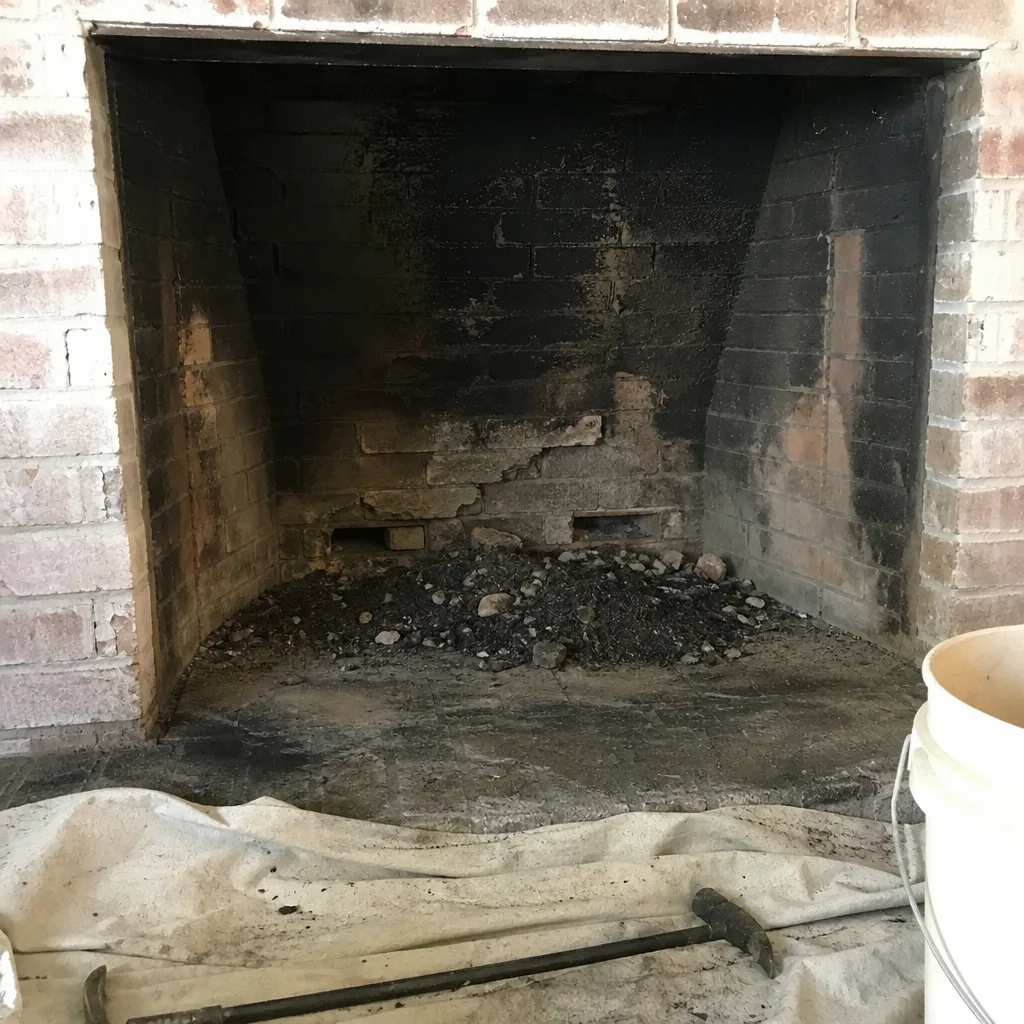 Before
 After
 Before
 After
When to Call a Professional
Some of these you can handle with a sweep; others need a trained inspection. Call us when you see smoke entering the room while a fire is burning, soot falling into the firebox, water staining on the ceiling near the chimney chase, glazed creosote visible at the top of the flue, a chimney fire that self-extinguished, a strong gas smell from a gas fireplace, or a carbon monoxide alarm. Any of those is a stop sign. Call us next for a scheduled cleaning and annual inspection if you have one burning season or more since the last sweep, if you’ve changed fuels or fireplaces, or if you’ve bought a home in Sharpstown with a fireplace you’ve never used. From cap to firebox, one call resolves the whole picture. Chimney Sweep Sharpstown offers free estimates in Sharpstown. Call (833) 991-8956. We answer 24/7. Fast dispatch from 7am to 7pm, Sunday through Friday.
Frequently Asked Questions
A chimney sweep in Sharpstown typically runs somewhere between about one-seventy-five and four hundred dollars for a standard wood-burning fireplace, with price depending on length of the flue, how easily accessible the access panels are, and whether a camera inspection is included. The written estimate we provide sets the final price, and we do the sweep and inspection in the same visit so you’re not paying for two separate appointments. Call (833) 991-8956 for an exact quote. Estimates are free.
A cleaning is needed when a camera inspection shows 1/8 inch or more of creosote on the flue wall. A repair is needed when the inspection shows something structural: a cracked flue tile, failed crown, missing cap, or liner damage. The difference is what the camera shows, and you should be able to look at that photo report yourself. We don’t recommend work without it. If what the inspection finds is repairable with HeatShield ceramic resurfacing rather than a full liner replacement, that’s usually the first option we’ll discuss. Call (833) 991-8956 for an exact quote. Estimates are free.
Sometimes yes, more often no. A flue whose tiles have cracked but whose structure is intact can frequently be resurfaced with HeatShield, which coats the flue interior and seals it against the creosote pattern. That’s a targeted repair, not a full liner. A flue with severe damage or a misshapen chase may need a DuraFlex flexible liner system. Which applies is a camera-inspection question. We don’t recommend a liner until we can show you what’s behind the creosote. Call (833) 991-8956 for an exact quote. Estimates are free.
Once per year is the standard answer for a fireplace in active use, with the sweep itself done when the inspection finds enough creosote to warrant it. In Sharpstown’s mild winters, a fireplace that sees light, occasional use can often go a bit longer between sweepings than one in a cold climate. What doesn’t go away is the annual inspection. That’s where the surprises live, and skipping it for two or three years is how a repairable problem becomes a structural one.
Creosote accumulates faster than most homeowners expect, and it doesn’t just sit there. It hardens from Grade 1 to Grade 2, then reaches Grade 3 (glazed and highly flammable), which is where chimney fires happen. Separately, an unswept flue can’t be inspected easily, so any cap, crown, or liner issue quietly progresses for another year. Neither outcome is a disaster if you call in time; both are far cheaper to catch when the symptom is a smell than when it’s staining on the ceiling.
That’s almost always creosote residue inside the flue, off-gassing as the air temperature changes, or moisture in the masonry carrying an odor to the room. It’s usually a cleaning-plus-inspection issue. If you also get smoke blowing into the room when a fire is actually burning, the cause has moved from “creosote” to “draft reversal,” which points to a pressure problem in the house rather than a dirty flue. Those need different fixes. Call (833) 991-8956 for an exact quote. Estimates are free.
The Bottom Line
The warning signs you can see or smell are usually the late part of the story. White efflorescence on the brick, soot falling into the firebox, a ceiling stain, or a smoky smell after the fire means the cause has been developing, and a camera inspection is the fastest way to find out what that cause is. The distinction to hold onto: some signs mean clean soon, other signs mean stop burning until someone looks. Glazed creosote, a cracked flue tile, firebox cracks, or a CO alarm are stop signs. A light odor, a burning season since the last sweep, or a stiff damper mean book a Cleaning-and-inspection visit. From cap to firebox, one call handles what the inspection finds.
When you’re ready for a proper look, call Chimney Sweep Sharpstown at (833) 991-8956 for a free estimate. We answer 24/7. Fast dispatch from 7am to 7pm, Sunday through Friday. Our technicians have up to 14 years of experience with all three creosote grades and the full chimney system, from fireplace repair to crown rebuilds, so whatever the flue tells us, we can resolve it.
Written by the team at Chimney Sweep Sharpstown.